Museo del Jamón Madrid: What to Order & Prices
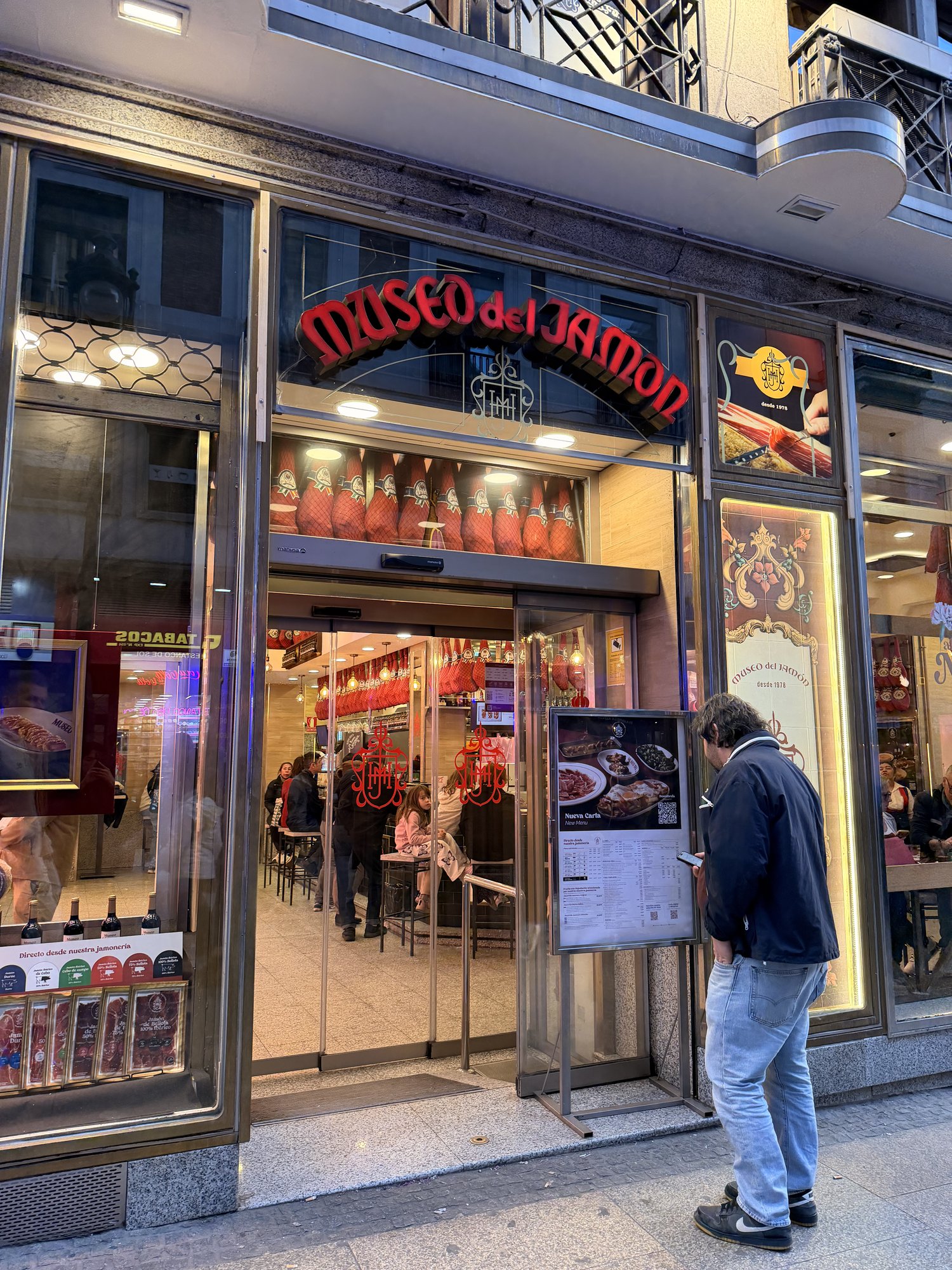
If you want one bite that sums up Madrid, get a plate of black label Ibérico ham at Museo del Jamón. It’s a stand-at-the-bar chain that’s been slicing acorn-fed ham since 1978, prices are shockingly low for the quality, and it’s easy to fold into a day of sightseeing since there are locations all over the historic center. I found it by accident after a long day of shopping on Gran Vía expecting a quiet little restaurant — it’s the opposite, loud and bright with hundreds of hams hanging from the ceiling — and it ended up being one of the best meals I had in the city. 🍖 Here’s what to order, what it costs, how the counter-service system works, and which location to pick.
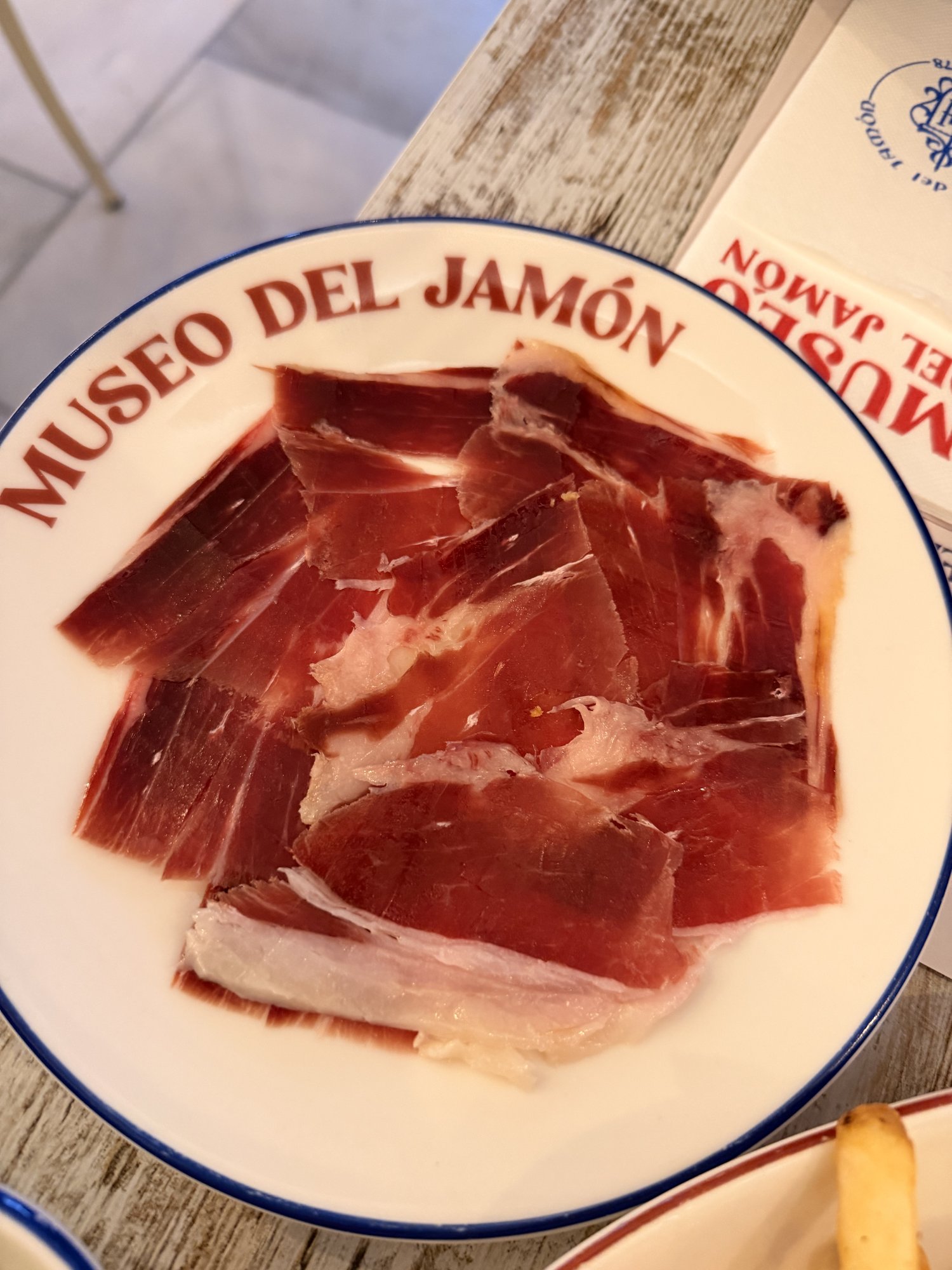
If you only order one thing, make it the black label Ibérico ham. Build the rest of the meal around that plate.
What Museo del Jamón actually is
“Museo del Jamón” translates to “Ham Museum”, but it’s not a museum, it’s a chain of stand-up bars and delis. It opened its first location on Paseo del Prado in August 1978, founded by brothers Luis and Francisco Muñoz Heras out of their family’s existing ham-wholesale business. It’s still family-run three generations later, now with more than a dozen locations across Madrid. You walk in and the ceiling and walls are covered in whole hams, legs pointed down, like a cured-meat cathedral. It got an extra layer of fame when Pedro Almodóvar filmed a scene here for Carne Trémula (Live Flesh) in 1997, and the chain now says it draws several million visitors a year between tourists and regulars.
Every location has roughly the same setup: a bar area for standing and eating cheap, and a deli/charcuterie counter — sometimes downstairs, sometimes off to the side — where the actual butchery happens and you can buy whole hams, cheese, and cured meats to take home. The one I went to had the liveliest deli downstairs, with locals chugging beer and snacking on tapas underneath thousands of hanging ham. It was a sight!
Wait, what does “black label” ham actually mean?
This is the thing I wish I’d understood before ordering, because it explains why the menu has ham at wildly different prices. Spain has a legally regulated color-coded labeling system for Ibérico ham, and it tells you exactly what you’re paying for:
- Black label (etiqueta negra) — the top tier. The pig has to be 100% Ibérico breed and raised free-range in the dehesa (oak woodland) and fattened exclusively on acorns during the montanera season. This is the real “pata negra.” It’s cured for years, and it’s the most expensive ham on the menu by a wide margin.
- Red label (etiqueta roja) — still acorn-fed (bellota) during montanera, but the pig is a cross-breed, usually 50–75% Ibérico rather than pure.
- Green label (etiqueta verde) — “cebo de campo.” The pigs get some outdoor time but are mostly fed on grain-based feed, not acorns.
- White label (etiqueta blanca) — “cebo.” Farm-raised on feed only, no acorn diet, no free-range requirement. This is the everyday, budget-friendly ham.
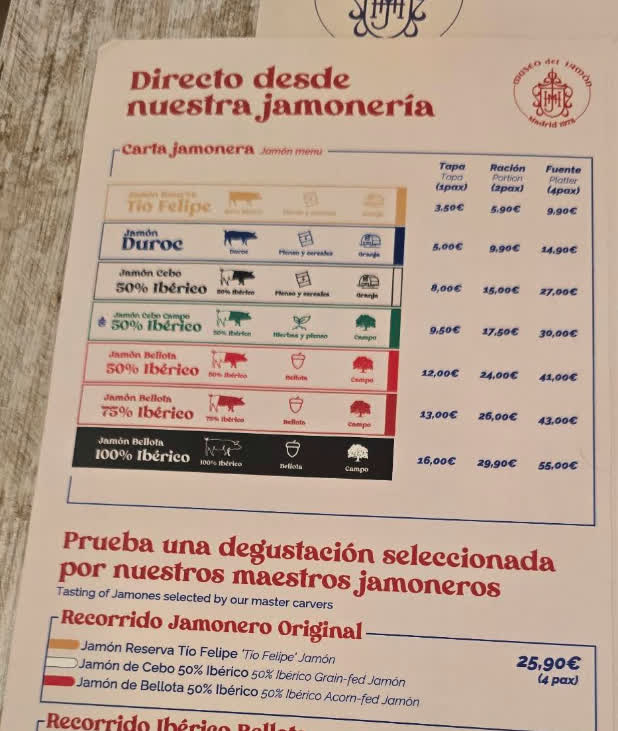
So when people rave about the black label ham, it’s because it’s the good stuff: acorn-fed, purebred, aged for years, with a deep marbled fat that basically melts as you eat it. It’s genuinely a different food from the white label ham on the same menu, and once you’ve tried them side by side you can taste the difference immediately. Museo del Jamón makes that comparison easy because the menu lists several grades side by side, so you can choose whether to sample or splurge.
What to order and what it costs
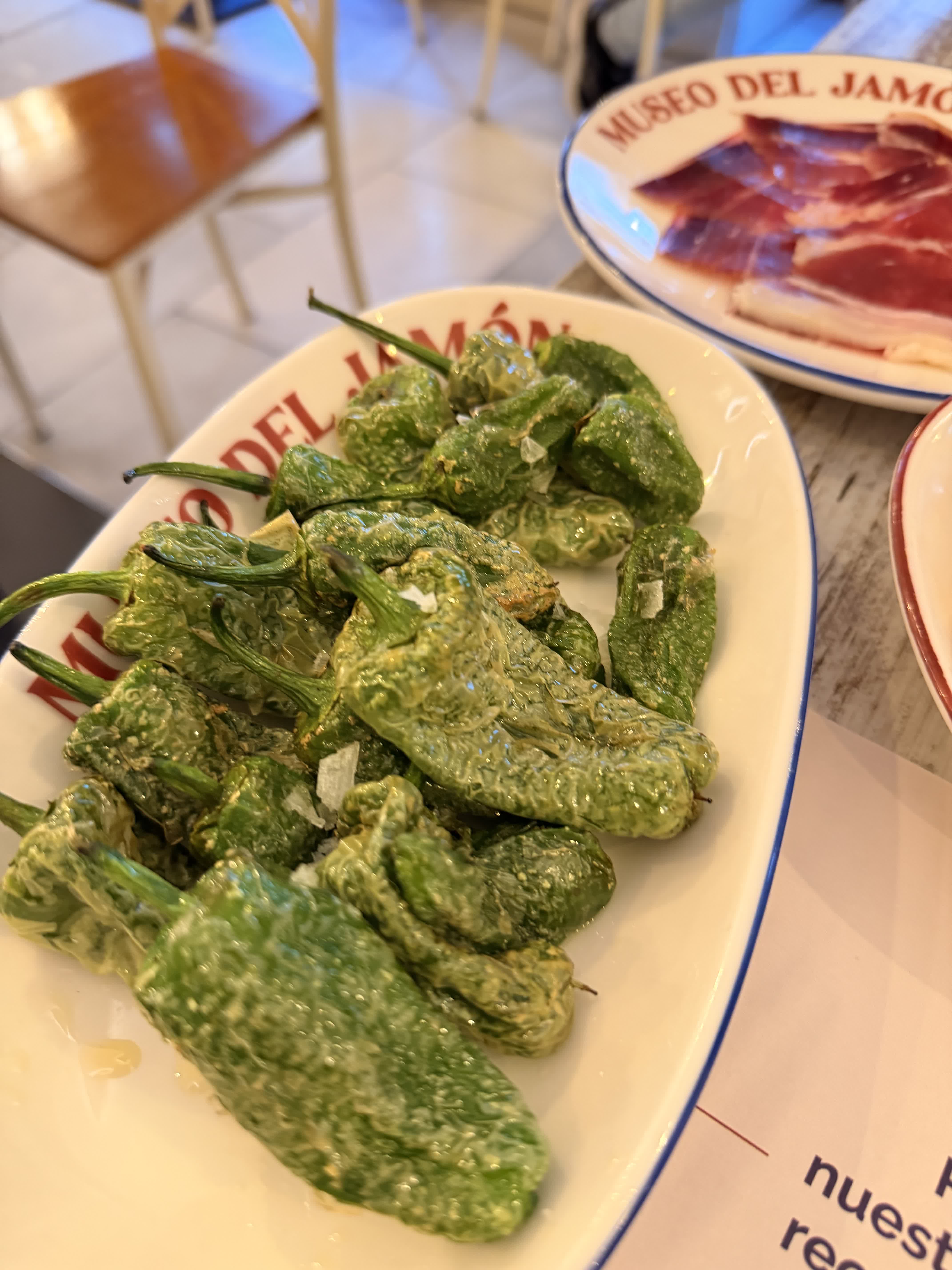
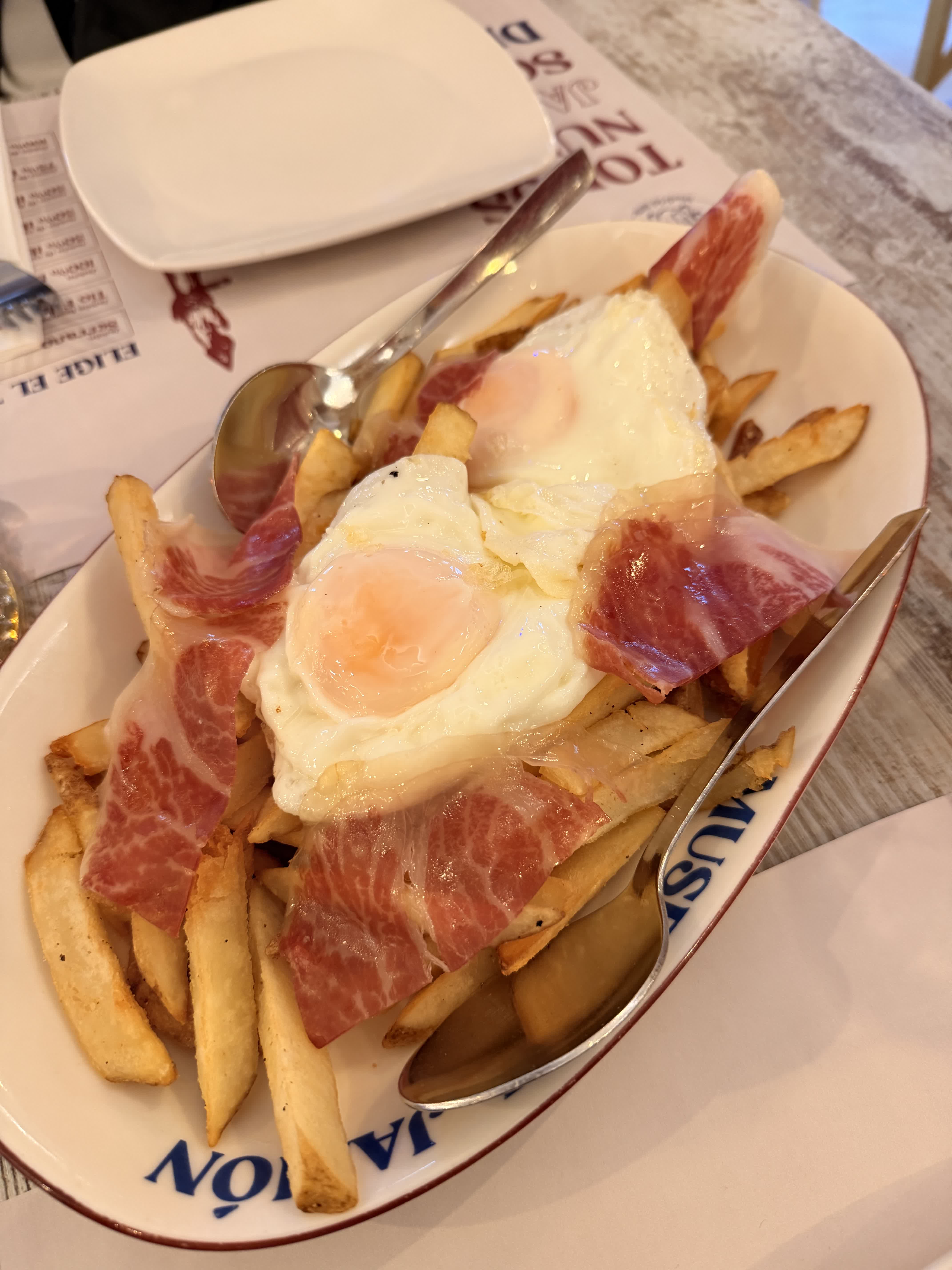
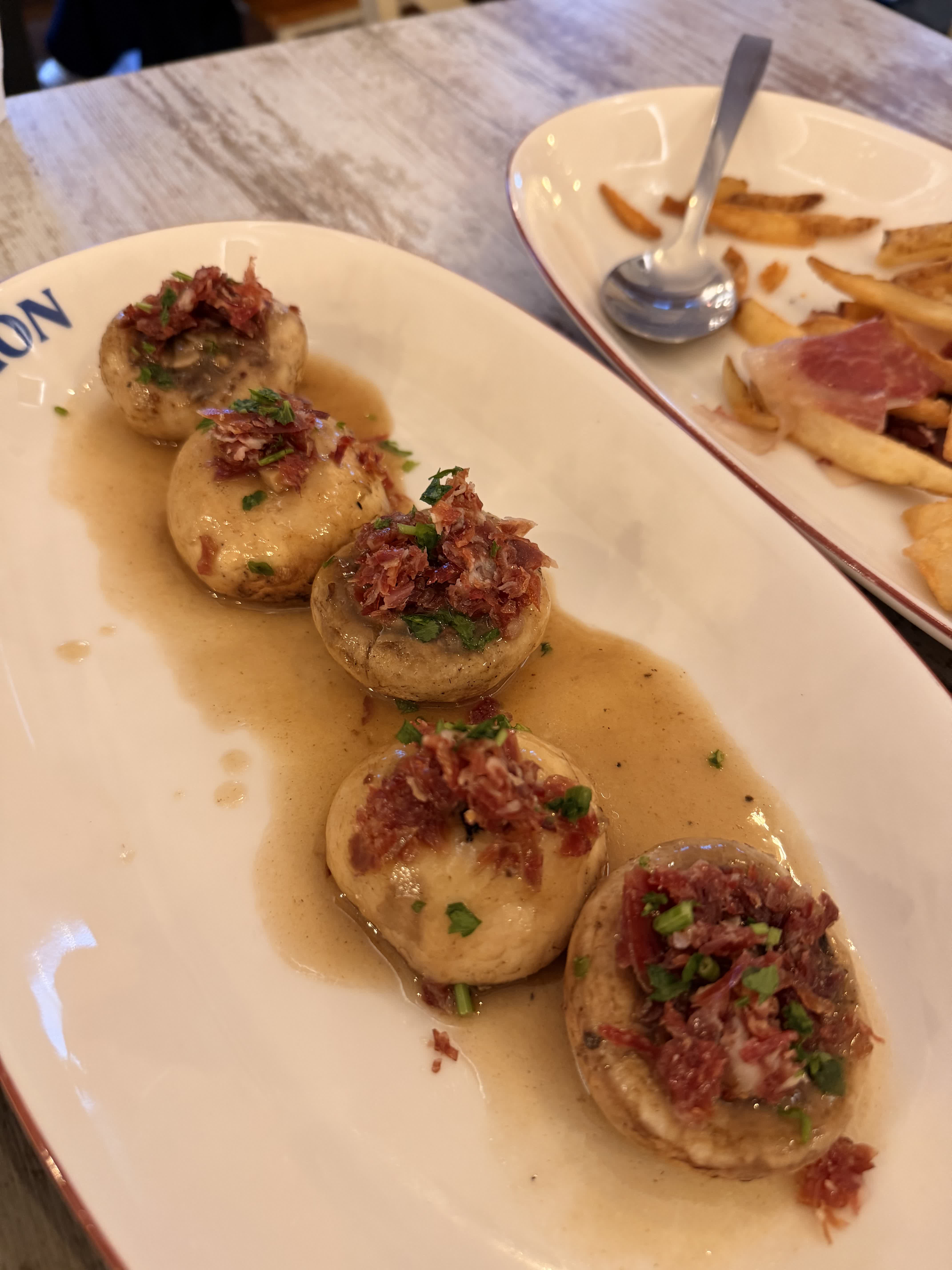
The move is simple: order the black label Ibérico ham plate first, then build around it. Other things worth getting — grilled green peppers, mushrooms stuffed with Ibérico ham, a plate of fries topped with a fried egg and extra ham, and a draft beer. Everything comes out fast and unfussy, and the bill stays reasonable even when you spring for the good ham. On the cheap end, a simple ham-and-cheese roll and a beer at the bar can run just a few euros; on the splurge end, a full black label ham plate is still nowhere near what you’d pay for the same quality at a sit-down restaurant. This is a place built around real Ibérico product at prices that don’t punish you for trying the best grade.
How to actually order at the bar
Here’s the part that catches people off guard: at most locations, the classic experience — and the classic prices — mean standing at the bar, not sitting down with a menu. You walk up, squeeze into a gap at the counter, and get a waiter’s attention yourself. Madrid bar culture rewards confidence here, so don’t be shy about waving someone down — it’s not rude, it’s just how it works. If you’d rather sit, most locations also have a dining room or lounge past the bar, but you’ll get full table service and pay table-service prices instead of bar prices.
Most of the locals were sitting at the deli bar downstairs, while the upstairs restaurant definitely had more visitors. We chose to sit upstairs because the ambience was lovely, we needed to rest our feet, and honestly, it did not disappoint. Service was amazing, the food was scrumptious, and the beer was one of the crispest beers I’ve ever had in my life 🍺.
Locations and hours
Museo del Jamón has several branches clustered around the historic center, all within easy walking distance of Puerta del Sol. The location I went to was Cra de S. Jerónimo, 6, Centro, 28014 Madrid, a few minutes from Sol and an easy stop if you are walking between Puerta del Sol, Plaza Mayor, and the museum/palace side of the city.
- Carrera de San Jerónimo, 6 — this is the one I visited. Go downstairs if you want the livelier deli-bar scene, or sit upstairs if you want a real break with table service and a calmer meal.
- Gran Vía, 72 — the biggest of the bunch, split into a bar, a dining room, and a lounge, so it feels less frantic than the smaller branches. Near Plaza de España / Universidad metro. Open daily roughly 9am–11:30pm (later, to 12:30am, on Fridays, Saturdays, and eves of holidays).
- Calle Mayor, 7 — between Puerta del Sol and Plaza Mayor, with an upper lounge, a first-floor lounge overlooking the bar and charcuterie, and an outdoor terrace.
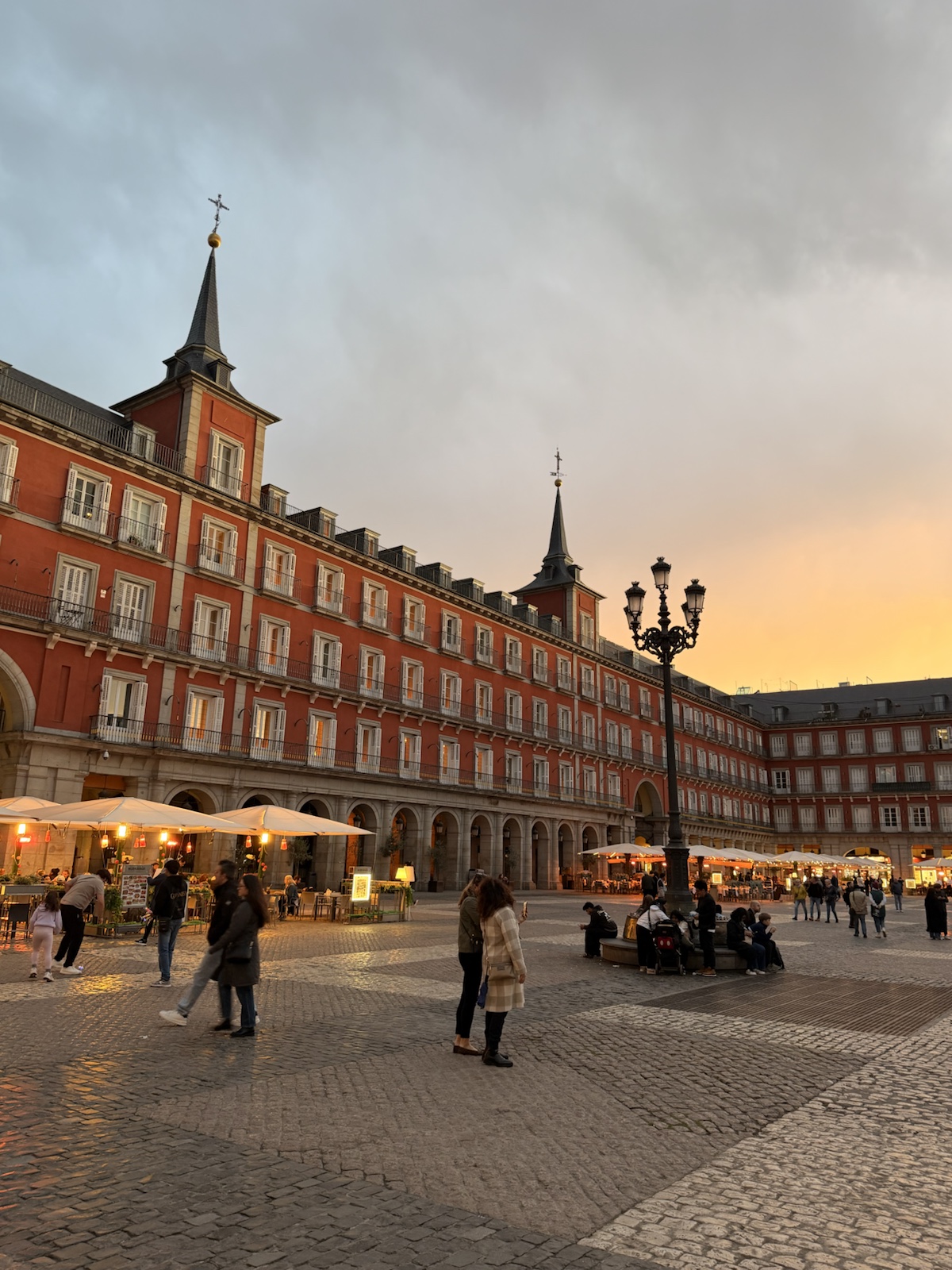
- Plaza Mayor, 18 — right on the square, handy if you’re already doing the old-town loop.
Hours run late into the night at most branches, which makes this a solid option even after a long day of sightseeing or shopping when all you want is a beer and some ham before heading back to the hotel. Hours and exact addresses can shift, so as of 2026 it’s worth checking museodeljamon.com or calling ahead (Gran Vía: +34 915 314 550) before you go, especially around holidays.
Wherever you land, look for the deli/charcuterie counter — even if you’re not buying anything to take home, it’s worth a look at the sheer number of hams hanging around you.
One last thing
If you’re building out a Madrid food list, pair this with a stop at Chocolatería San Ginés in my Madrid food guide and use my 2 days in Madrid itinerary to fit it around shopping, Retiro, and 360 Sky Bar. Go hungry, order the black label, and do not overthink the rest.
Museo del Jamón Madrid FAQ
What should you order first? Start with the black label Ibérico ham plate, then add simple share plates like peppers, mushrooms, fries with egg and ham, and a beer.
Which location should you choose? I liked Carrera de San Jerónimo, 6 because it is central and easy to pair with Sol, Plaza Mayor, and the old-town walking route.
Is it a real museum? No. It is a casual ham bar, deli, and restaurant chain.
Should you stand at the bar or sit down? Stand at the bar for the classic casual experience and lower prices; sit upstairs or in the dining room if you want a calmer break.
See you on the other side of the hill.
Keep exploring
Royal Palace of Madrid Review: Tickets & Armoury
A first-person Royal Palace of Madrid review with ticket tips, what to see inside, and why the Royal Armoury is worth the extra time.
2 Days in Madrid Itinerary for First-Time Visitors
A realistic 2 days in Madrid itinerary with the Royal Palace, Plaza Mayor, flamenco, churros, Gran Via, Retiro Park, and 360 Sky Bar.