3 Days in Seville: Cathedral, Triana & Tapas
A 3-day Seville itinerary: explore the Cathedral, Royal Alcázar, Santa Cruz, and Plaza de España, with time for Triana, flamenco, and tapas.
I loved how relaxed Seville felt, even with so much to see. The Alcázar was incredible, but my favorite part was wandering its gardens, hearing this wild screaming, and finally realizing it was the peacocks! We even ran around the hedge maze afterward. 🦚 I’m so excited for you to experience Seville, and I hope this itinerary makes your trip easy to plan!
— see you on the other side of the hill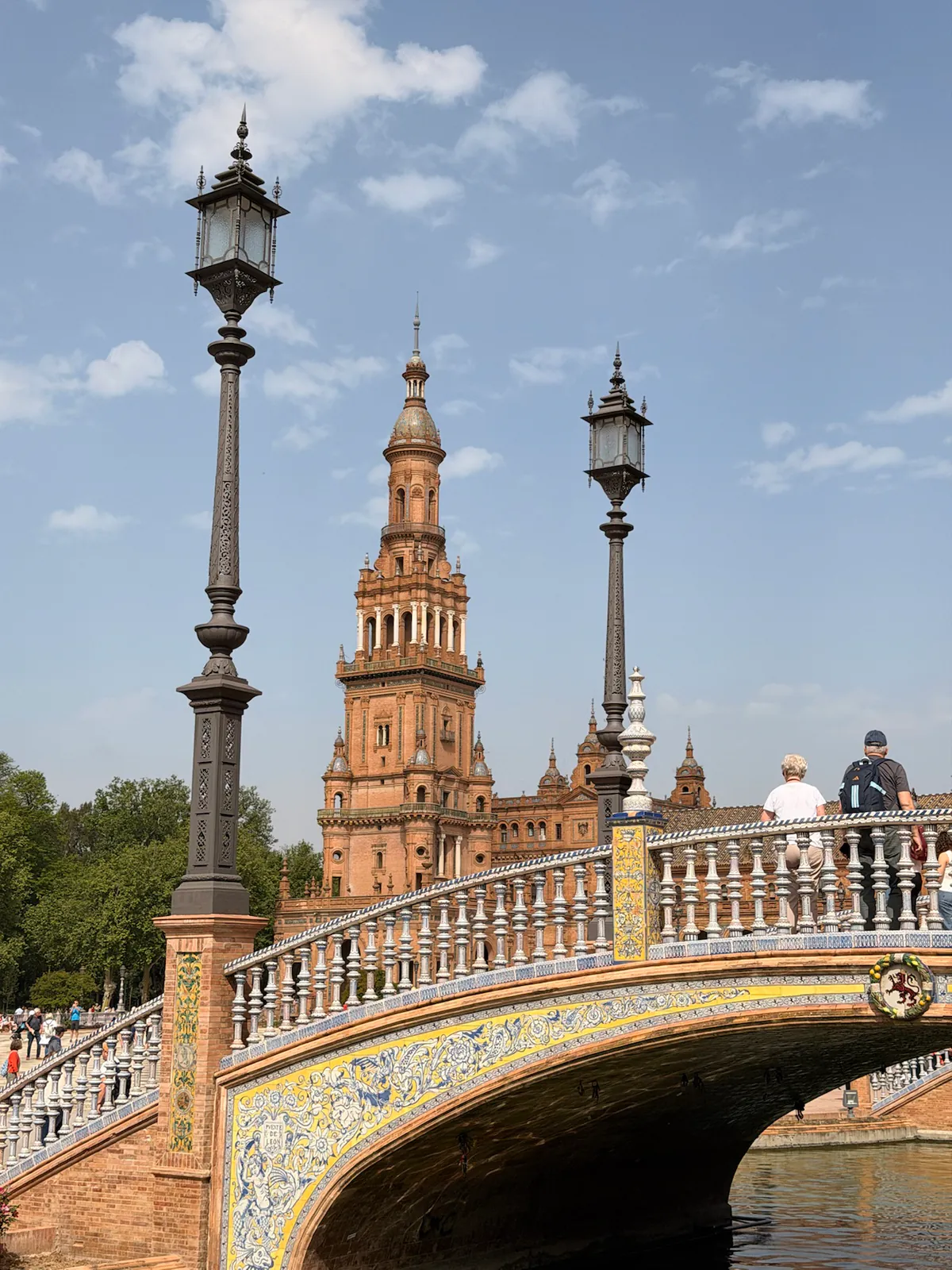



Day OneSanta Cruz & the Alcázar Quarter
Today we’re exploring Santa Cruz, starting with breakfast before the Cathedral, Giralda, and Alcázar. After a late tapas lunch, we’ll wander through the neighborhood’s old lanes and end the night with an intimate flamenco show.
- Casco Antiguo · Santa Cruz · Alcázar
- 8 stops
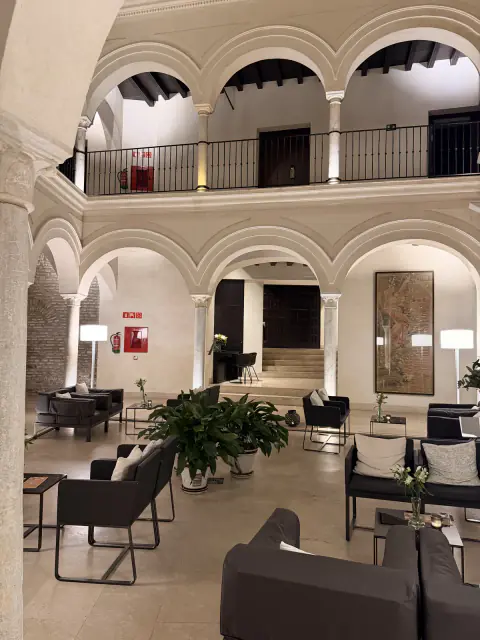 the beautiful courtyard 🎍
 so classy ~
Stop 18:00 AM
Hotel Posada del Lucero | Monumento Nacional
Posada del Lucero is a 16th-century inn turned hotel in Seville's old town, with its original open-air courtyards still at the heart of the building. It's honestly one of the BEST hotels we've stayed at—nearly 500 years old and protected as a Spanish national monument, but still modern and chic. You're right by the Metropol Parasol and the main shopping streets, and the rooftop deck has a bar and a small pool above the old center. The location also couldn't be better for exploring Seville's main sights!
Fun fact: It's the last one left of the old inns that used to put travelers up in Seville. And literal Saints and Royalty have stayed within these walls.
Then 16 min walk to the next stop
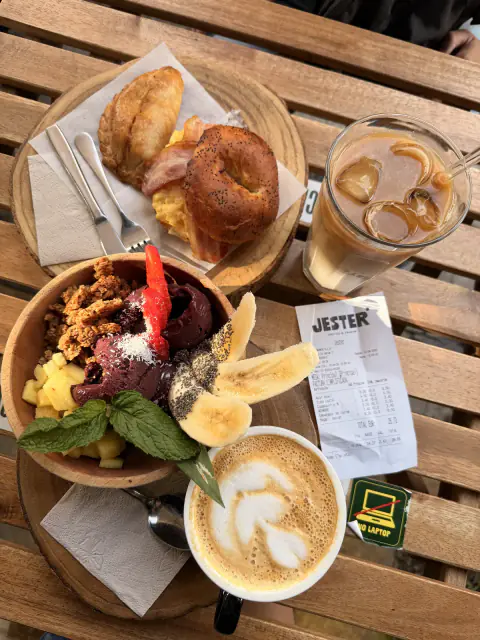 the best acai bowl ever!
 granola for days! 🛍️
Stop 28:30 AM~ 1 hour
JESTER Specialty Coffee & Juice
JESTER is a tiny counter-service coffee and juice bar with five shops around central Seville. This was our first meal in Spain and honestly the food highlight of my whole trip — the açaí bowl was INCREDIBLE. I've never had one like it, and their handmade granola is out of this world! I just had to buy a couple bags to bring home (still munching on it as we speak 😋). Get a bowl and a coffee; it's the easiest cold, fruity breakfast in a city of fried and cured food. 😋
🎟️ Similar Experiences
Fun fact: They're the ones who brought açaí and smoothie bowls to Seville, and their coffee is single-origin from places like Burundi and Costa Rica.
- Most branches shut at 14:00 and don't open again until 16:30. check branch hours (opens in a new tab)
Then 8 min walk to the next stop
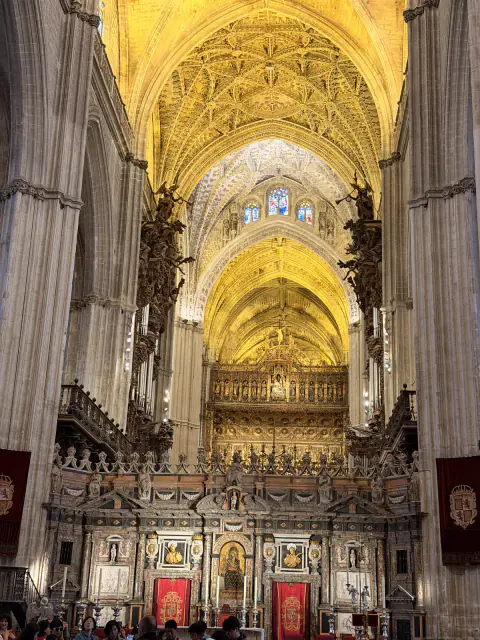 jawdropping church ⛪️
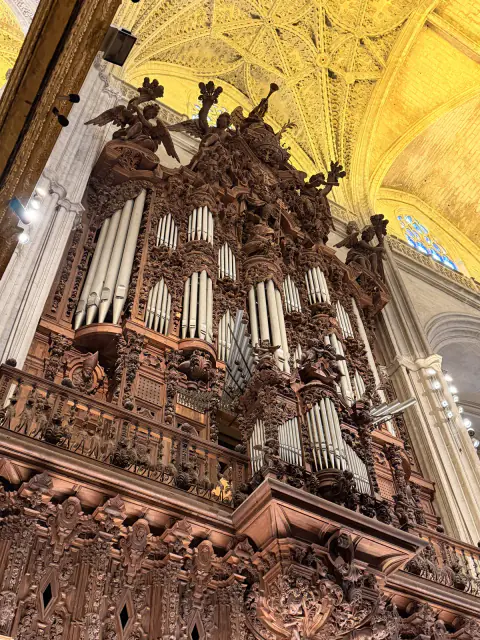 so intricate!
Stop 311:00 AM~ 2 hours
Catedral de Sevilla
This is the largest Gothic cathedral in the world, UNESCO listed since 1987, and honestly it's stunning. The detail everywhere is so intricate — I'd never seen an organ quite like that one, or an altar that elaborate. The Retablo Mayor is considered the largest altarpiece in Christendom, and it's worth taking a few minutes to appreciate all the detail. Also look for Christopher Columbus's tomb, held above the ground by four sculpted heralds. 🤯
Similar Experiences
Fun fact: The whole cathedral stands on the city's Almohad mosque, and the orange-tree courtyard beside it is that mosque's old ablutions patio.
Then under 1 min walk to the next stop
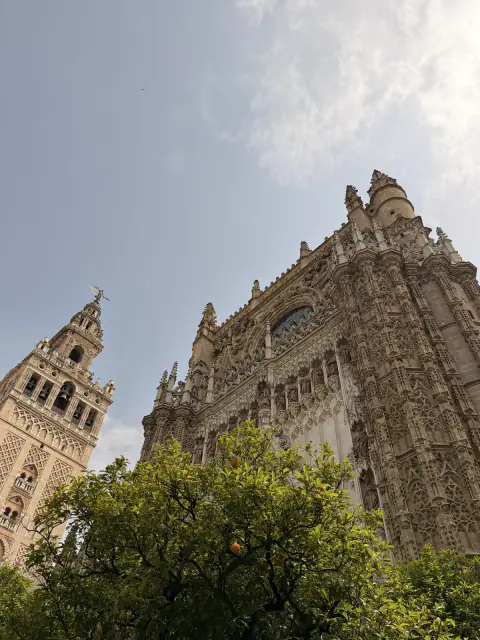 the tower and the cathedral ⛪️
Stop 412:30 PM~ 1 hour
La Giralda Bell Tower Climb
The Giralda is the Cathedral's bell tower, but it started life as the minaret of Seville's Almohad mosque back in 1198. The tower climb is 35 ramps all the way up, built wide enough for the muezzin to ride a horse to the top everyday to make the call to prayer. At the top you step out into the belfry, about 104 metres up and right beside the bells — the highest viewpoint in the old town. Look down at the Cathedral roofs too. 🔔
Similar Experiences
- There's no separate ticket for the tower — the climb comes with the Cathedral's combined ticket tickets (opens in a new tab)
- There's no elevator, and the ramps add up to roughly 37 storeys inside a stone shaft that gets seriously hot, so take the earliest slot you can get.
Then 5 min walk to the next stop
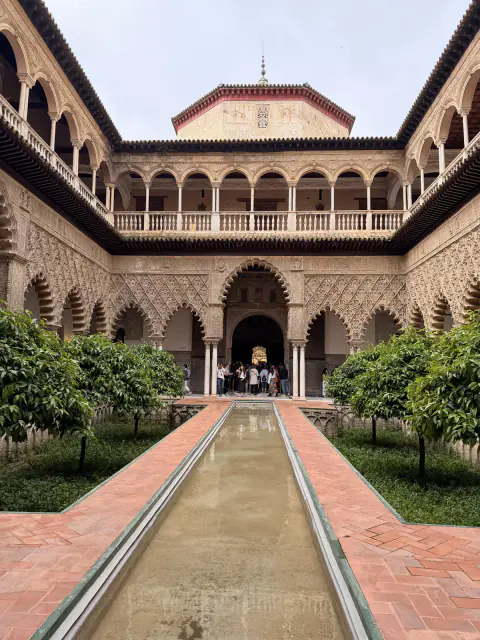 the iconic shot 📸
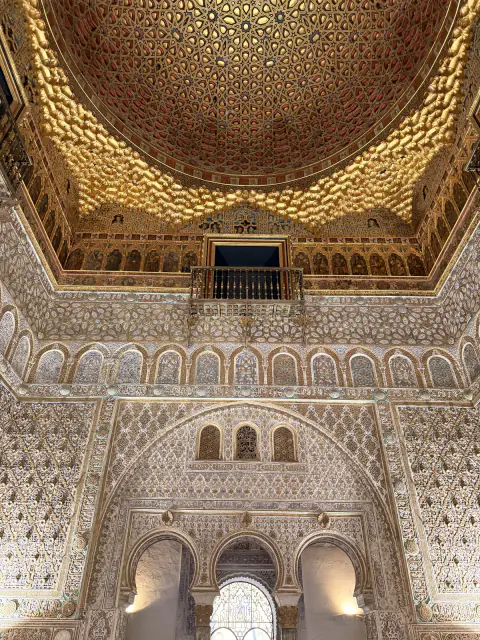 just look at those details
Stop 51:00 PM~ 3 hours
Royal Alcázar of Seville
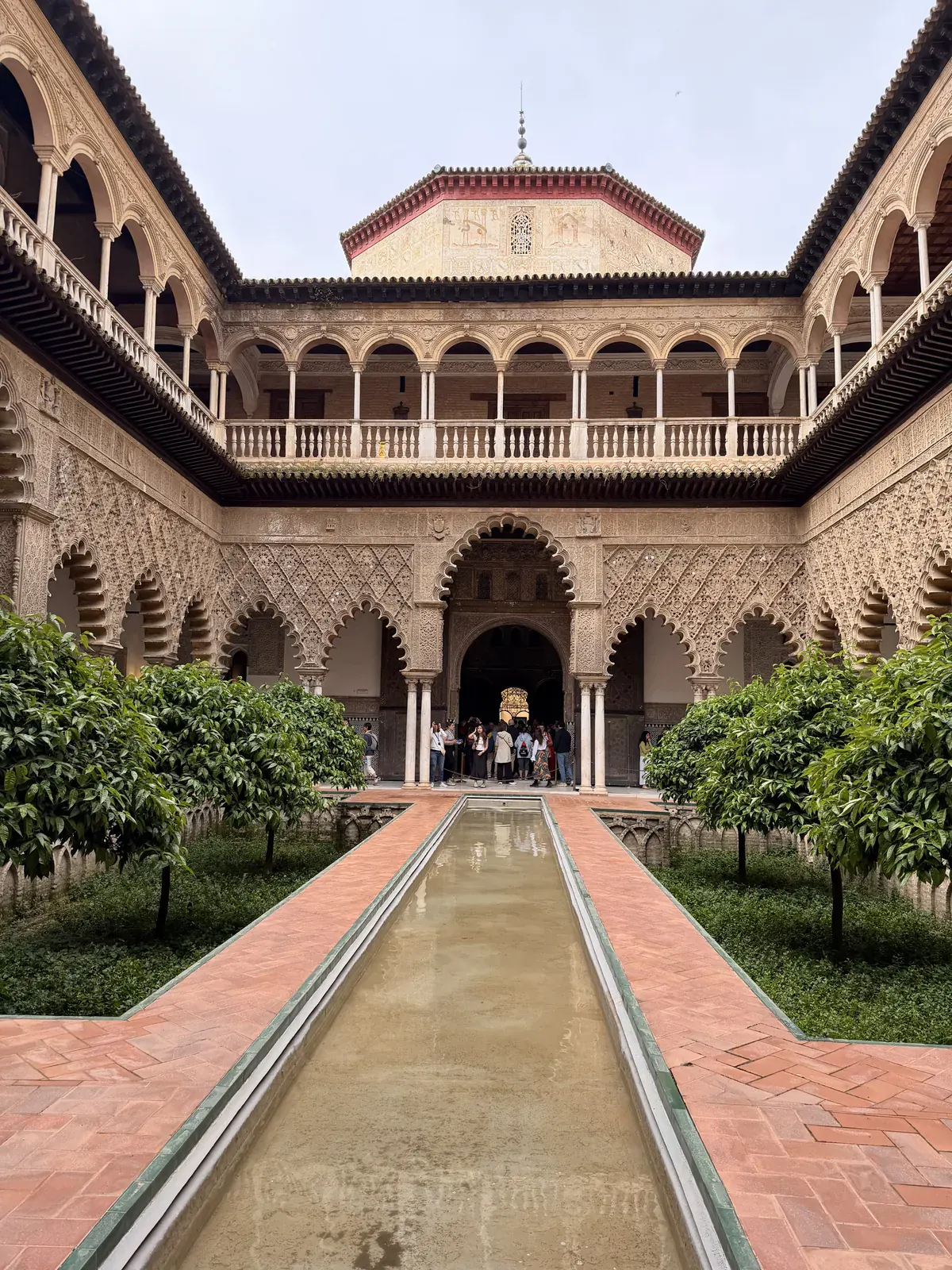
The Real Alcázar is a walled palace complex right behind the Cathedral, and it's the oldest royal palace still in use in Europe. I'll admit I went because Dorne in Game of Thrones was filmed here, but it turned out to be one of the most IMPRESSIVE buildings I've ever walked through. We stayed around 3 hours just exploring the palace and the huge garden. The garden itself is full of surprises with free roaming peacocks 🦚 and a maze to explore! If you want to see the upper royal apartments, add the Cuarto Real Alto when you book.
Similar Experiences
Fun fact: The Mudéjar palace at its heart is King Pedro I's, from the 1300s, and it was built onto a 10th-century Muslim fortress that was itself sitting on Roman remains.
- Entry is by timed slot through the Puerta del León on Plaza del Triunfo, and the time stamped on your ticket is when you need to be walking in, not when to leave your hotel. Peak-season weekend slots sell out well ahead.
- The Cuarto Real Alto is a separate supplement that has to be added to your main ticket at the same time, so decide before you check out rather than at the door. book tickets (opens in a new tab)
- That same general ticket also gets you into other city-run museums, including the Antiquarium and the Triana Ceramics Museum, so hang onto it.
Then 4 min walk to the next stop
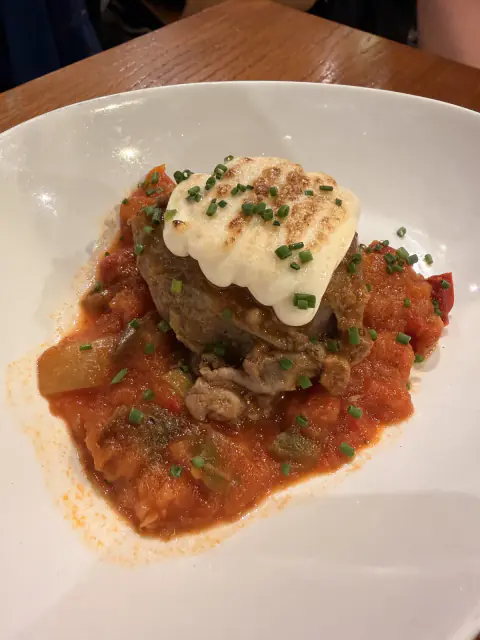 pork cheek 🐖
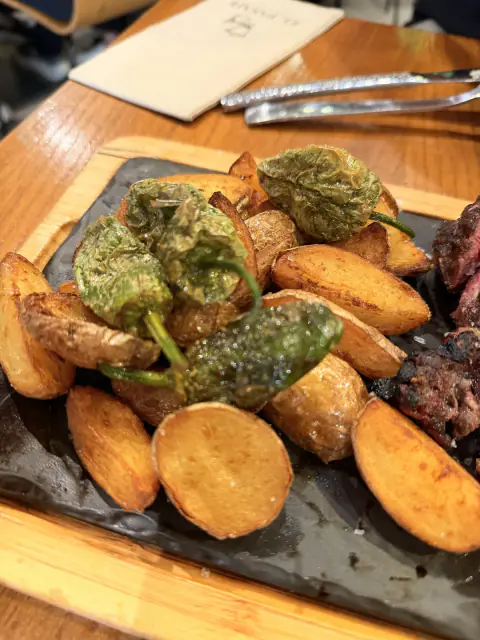 patatas bravas
Stop 64:00 PM~ 2 hours
El Pasaje Tapas
Tucked into a covered passage in Barrio Santa Cruz, five minutes from the Alcázar, El Pasaje serves Mediterranean-inspired dishes alongside classic Sevillian tapas. We walked in without a reservation and ate well — grilled steak, pork cheek, scallop, butterfish ceviche, and patatas bravas. Stuffed! The scallop bites were my favorite—there was so much flavor in each one!
🎟️ Similar Experiences
Then 2 min walk to the next stop
![Related experience: [Seville] City & Local Culture Bike Tour](/itinerary/photos/affiliate-827892cf488984584744-44edfd0ff036-w180.webp) Barrio de Santa Cruz
Barrio de Santa CruzStop 76:00 PM~ 1 hour
Barrio de Santa Cruz
Right behind the Cathedral sits Barrio de Santa Cruz, the old quarter — a maze of narrow lanes, whitewashed houses and little squares full of orange trees. Santa Cruz was Seville's historic Jewish quarter and home to an influential Sephardic community until 1492, and its maze-like street plan still survives today. Because the neighborhood surrounds the Cathedral, Giralda, Alcázar, and Archivo de Indias, it's easy to walk between Seville's main monuments. Look for the Callejón del Agua, along the Alcázar wall. 🍊
Then 13 min walk to the next stop
![Related experience: [Seville] Casa de la Memoria Flamenco Show — Seville's most celebrated performance 💃](/itinerary/photos/affiliate-5ff10f83332b4803bbb4-6d2b0ffcf8c1-w180.webp) Casa de la Memoria Flamenco Show
Casa de la Memoria Flamenco ShowStop 87:30 PM~ 1 hour
Casa de la Memoria Flamenco Show
Casa de la Memoria is an intimate cultural center in central Seville where flamenco is presented as a focused live performance. You're in the courtyard of an old Sevillian house, 80 people max, seated in rows around a small stage. There are no microphones, so you hear every note, voice, and footstep naturally. Each hour-long show features four artists—two dancers, a singer, and a guitarist—with no bar service interrupting the performance. The small room puts you incredibly close to the performers, making the whole show feel especially intimate. 🎸
Similar Experiences
Fun fact: The house it performs in was the stables of the Palacio de la Condesa de Lebrija next door.
- Seating isn't assigned and the room only holds 80, so get there 15 to 30 minutes before your session if you want to be close enough to see the footwork.



Day TwoPlaza de España & Tapas
We’re starting the day around Plaza de España and María Luisa Park, followed by lunch at Atávico. From there, we’ll head back into the old center for churros, the Setas, and a guided tapas crawl.
- Parque de María Luisa · Alfalfa · Encarnación
- 6 stops
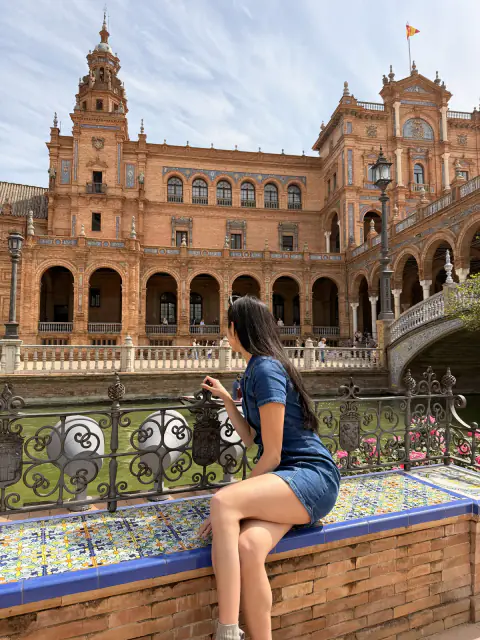 gorgeous plaza 💕
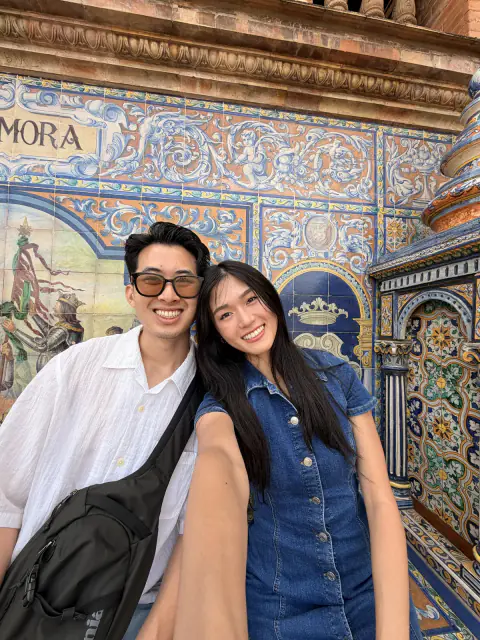 detailed alcoves
Stop 19:00 AM~ 2 hours
Plaza de España
Plaza de España is a massive semicircular plaza built for Seville's 1929 Ibero-American Exposition, with an ornate palace, a canal, and four colorful tiled bridges. It's absolutely GORGEOUS, and I still can't believe it's free — we spent ages strolling around and listening to live flamenco performers and musicians. You can rent a rowboat on the canal too. Before you leave, walk around the 48 tiled alcoves—each one represents a Spanish province and has its own painted ceramic map. 🤍
🎟️ Similar Experiences
Fun fact: The plaza is Star War's Naboo and it was also the shooting location for Lawrence of Arabia! 🎥
- The rowboat service is not open from May 30 to July 20 while the Icónica music festival takes over the plaza. Bring cash either way, since the kiosk doesn't take cards. boat details (opens in a new tab)
Then 6 min walk to the next stop
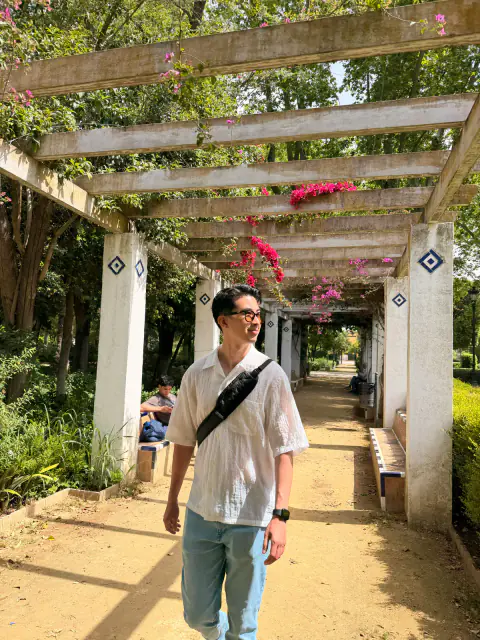 under the bougainvillea
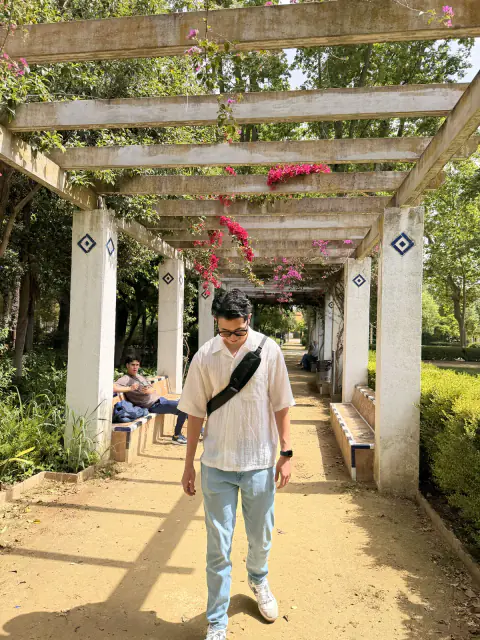 flowers galore
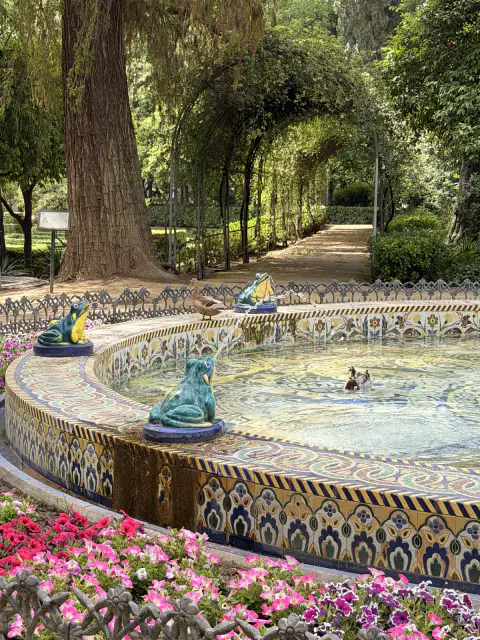 beautiful tiled fountains ⛲️
Stop 210:30 AM~ 1 hour
Parque de María Luisa
Parque de María Luisa sits right next to Plaza de España, so we just wandered over after. It's Seville's main historic park, with 34 hectares of fountains, tree-lined paths, and locals out enjoying a stroll. It's free and open late, and there's enough shade to duck into when the heat gets to you. Bring a picnic if you feel like sitting a while. Wander a little deeper into the park and you'll find the Fuente de las Ranas and a tiny island filled with ducks.
🎟️ Similar Experiences
Fun fact: A French landscape architect gave it its current Hispano-Arabic layout in the 1910s, borrowing from the Alhambra and the Alcázar.
- The park also has 2 free museums inside: Archaeological Museum and the Museum of Arts and Popular Customs, so you can step out of the sun without paying for anything or leaving the gardens. learn more (opens in a new tab)
Then 10 min walk to the next stop
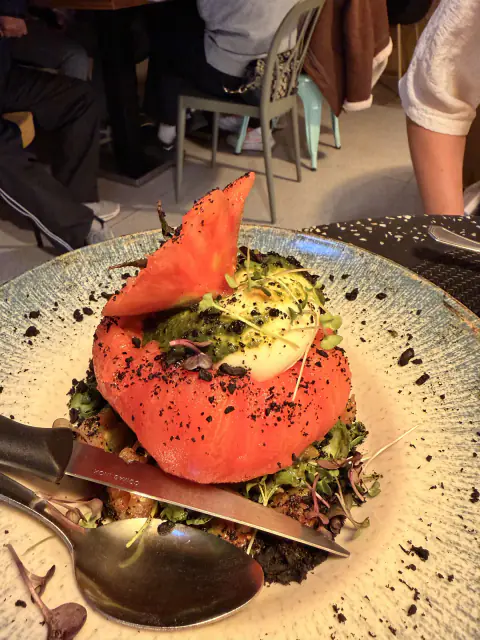 look at that beauty 🍅
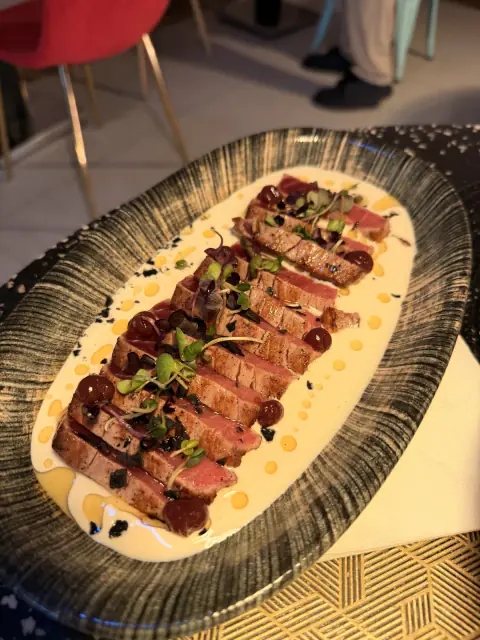 phenomenal tuna
Stop 312:00 PM~ 2 hours
Atávico - Ancestral Gastronomy
Atávico is a tiny spot with an open kitchen out near Parque de María Luisa. The entire menu is gluten-free and skips refined sugar and ultra-processed ingredients, with each dish designed alongside nutrition specialists. We found it on Google Maps and it was a 10 out of 10 — fine-dining cooking at a reasonable price. The tuna tataki came with an aioli emulsion that was out of this world, and the tomato burrata had the most BEAUTIFUL fresh tomato I've ever seen. The keto roll is one of their signature dishes and an easy one to share. 😋
🎟️ Similar Experiences
Fun fact: In a city where the default menu is fried, cured or on bread, this is one of the rare sit-down places a gluten free, keto, or vegan traveler can order across without negotiating every plate.
- Atávico is closed all day Tuesday, and midweek the kitchen shuts for a few hours between services, so aim for a late lunch or an evening table rather than the gap in between. reserve (opens in a new tab)
Then 9 min by taxi to the next stop— or 26 min on foot
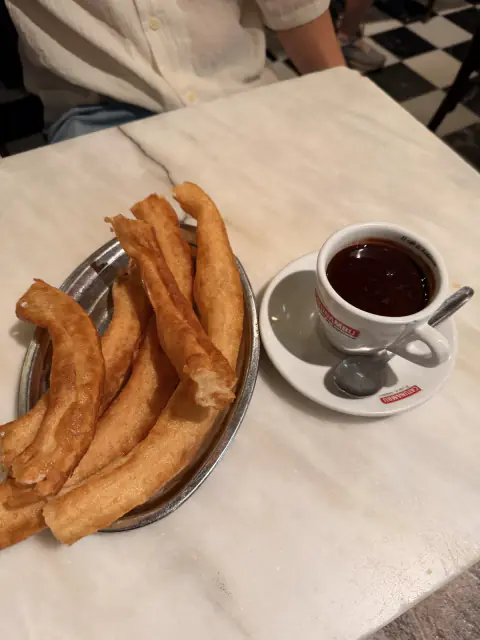 porras con chocolate ☕️
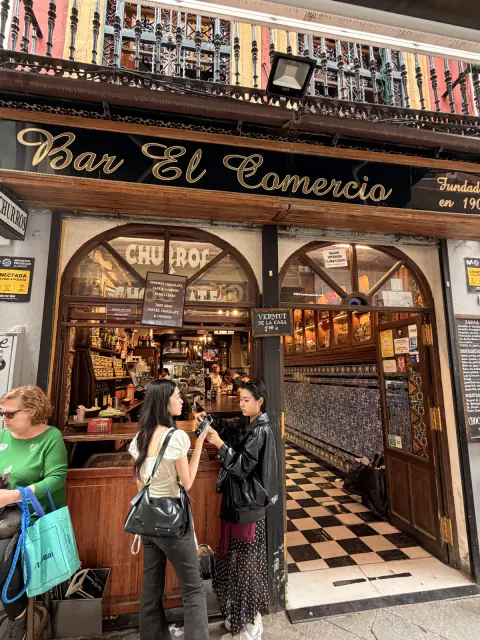 the exterior
Stop 42:00 PM~ 1 hour
Bar El Comercio
Bar El Comercio has been serving churros on Calle Lineros since 1904, passing from father to son through the generations. The original tiled front is still there, and there's a marble dining room in the back. Nobody seats you, so we wandered down the hallway and picked our own table. I got porras, the thicker churro, and they came out delicious and seriously CRISPY — you can watch them being fried right in front of you. If you want something savory too, try the tosta de pringá. 🍩
🎟️ Similar Experiences
Fun fact: The other house specialty is the mantecaíto — a bun of sirloin in whisky sauce, served with chips.
- The line out front is often for the takeaway window beside the door, not for tables, so don't let it scare you off if you want to sit down.
- It's shut all day Sunday.
Then 4 min walk to the next stop
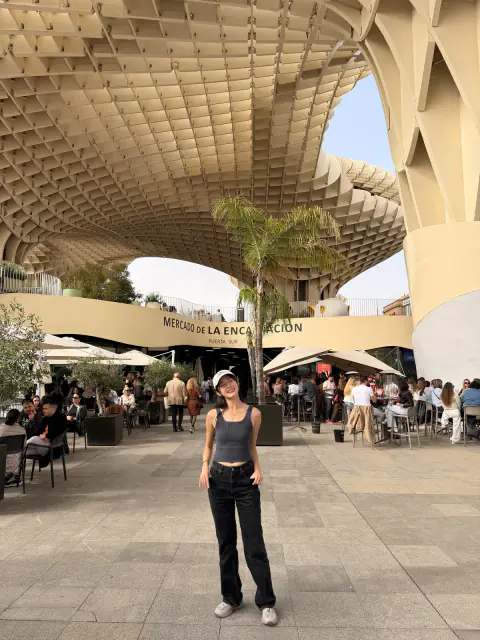 las setas 🍄
Stop 52:30 PM~ 2 hours
Setas de Sevilla
Las Setas is an enormous wooden canopy rising above Plaza de la Encarnación in the center of Seville. It's beautiful from every angle—you can admire it from underneath for free or buy a ticket to walk the rooftop for 360-degree views across Seville. At night, the Aurora light show washes the canopy in changing colors. Underneath the canopy, you'll also find a market, a flamenco venue, and the Antiquarium archaeological museum.
Similar Experiences
- the Aurora show doesn't start until about 21:30 and only runs April through October
Then 11 min walk to the next stop
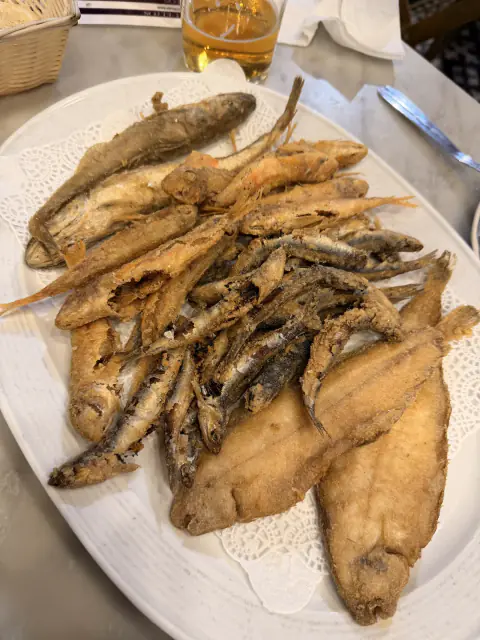 fried fish 🐟
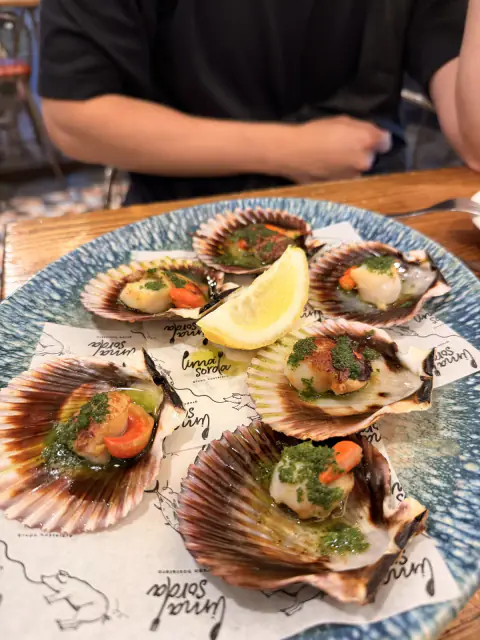 yummy tapas
Stop 67:30 PM~ 3 hours
Seville Tapas Crawl
Make sure you dedicate at least one evening to a full-blown tapas crawl—you’re not doing Seville properly otherwise! I'd recommend joining a guided tour so a local can show you how a real Sevillian tapas crawl works and take you beyond the most obvious spots. Come hungry and look out for Sevillian classics like pringá, jamón ibérico, solomillo al whisky, salmorejo, cazón en adobo, fried fish, and garbanzos.
Similar Experiences
Fun fact: Seville proudly calls itself the world capital of tapas, and it's oldest bar in the city dates back to 1670: El Rinconcillo.
Day ThreeOld Town & the Riverfront
Today we’re starting in the old town with El Salvador and Casa de Pilatos, then crossing the river for lunch at Triana Market. Afterward, we’ll head back toward the Maestranza and finish the afternoon with a Guadalquivir cruise.
- Alfalfa · Triana · Arenal
- 5 stops
![Related experience: [Seville] Cathedral + Giralda climb + Church San Salvador Skip the Line tix](/itinerary/photos/affiliate-a4d66f057912d1542d6c-47fd403ea41b-w480.webp) Iglesia Colegial del Divino Salvador
Iglesia Colegial del Divino SalvadorStop 110:30 AM~ 1 hour
Iglesia Colegial del Divino Salvador
This enormous Baroque church fills one side of Plaza del Salvador and is considered Seville's most important church after the Cathedral. The strange part is what's underneath it. The church stands on the site of Islamic Seville's main mosque, which was commissioned in 829. Step out to that orange-tree patio and you'll spot the Roman capitals reused in it. A staff-led tour can help you make sense of the building's Islamic and Christian history. 🕌
Fun fact: The bottom of the bell tower isn't really a bell tower at all — it's the surviving stump of the mosque's minaret.
- Buying the cheaper El Salvador-only ticket includes the audio guide; if you're using the combined Cathedral ticket instead, the audio guide is a small paid add-on you have to choose at checkout. tickets (opens in a new tab)
Then 8 min walk to the next stop
![Related experience: [Seville] Casa de Pilatos Ground Floor Entry Ticket](/itinerary/photos/affiliate-3cb22e4e56c49fdb9096-f36a0c127787-w390.webp) Casa de Pilatos
Casa de PilatosStop 211:30 AM~ 1 hour
Casa de Pilatos
Tucked into San Bartolomé, Casa de Pilatos is a private palace that might be the largest and most lavish home in Seville — and the family still lives upstairs. It's a quieter alternative to the Alcázar, with Andalusian palace architecture that blends Gothic, Mudéjar, and Renaissance styles. You can wander through tiled courtyards, gardens, and rooms filled with Roman sculptures. A standard ticket covers the ground floor, while an upgraded guided visit takes you into the family's upstairs apartments.
Similar Experiences
- The upper floor isn't open every day, and when it is you see it with an accompanied group rather than wandering it yourself learn more (opens in a new tab)
Then 24 min walk to the next stop
![Related experience: [Seville] 3-Hour Tapas Crawl with a local guide: 4 atmospheric venues, 10 dishes to sample 🍤](/itinerary/photos/affiliate-be556210d115716f9d97-ab700de34fec-w480.webp) Mercado de Triana
Mercado de TrianaStop 32:00 PM~ 1 hour
Mercado de Triana
Right at the foot of the bridge on the Triana side, this is the neighborhood's working food market. Fishmongers, butchers, bakeries, bars, and wine counters all share the space, giving it the feel of a real neighborhood market. Head down to the basement, where the market sits on the excavated ruins of the Castillo de San Jorge, the Arab fortress that later became the seat of the Spanish Inquisition. The ruins were uncovered during construction ahead of Expo '92 and opened to the public with the renovated market in 2001. 🐟
Similar Experiences
- Go before 14:30 Monday through Saturday if you want the market itself — the produce stalls close then and don't open at all on Sundays or holidays, which leaves you with the bars and restaurants only. see the hours (opens in a new tab)
Then 10 min walk to the next stop
![Related experience: [Seville] Plaza de Toros de la Maestranza Guided Tour](/itinerary/photos/affiliate-f696ba0b2aca3b50bc77-94279cc1a891-w180.webp) Plaza de Toros de la Real Maestranza
Plaza de Toros de la Real MaestranzaStop 43:00 PM~ 1 hour
Plaza de Toros de la Real Maestranza
Seville's bullring, the Maestranza, opens for paid visits, so you can see inside a working arena without attending a corrida. A guided visit takes you through the arena, paintings room, bullfighting museum, matadors' chapel, and horse courtyard. Look for the Puerta del Príncipe, the gate used to carry a matador out after a triumph. The museum also displays bullfighting art by Goya and other Spanish artists. Bullfights are also held on select dates, although the daytime visiting hours may end early when an event is scheduled.
- Check the ring's calendar against your date before you build an afternoon around it, because visits stop at 15:00 on bullfight days and don't run at all on concert dates. check the schedule (opens in a new tab)
Then 7 min walk to the next stop
![Related experience: [Seville] 1-Hour Guadalquivir Eco Cruise with panoramic views of Seville from the river 🚢](/itinerary/photos/affiliate-67a1381667012f3ca3c5-e9b3cc156934-w180.webp) Guadalquivir River
Guadalquivir RiverStop 54:30 PM~ 1 hour
Guadalquivir River
Guadalquivir River is Spain's ONLY major navigable waterway stretching 374 miles long and connects directly to the Atlantic Ocean. This river made Port of Seville the only commercial river port in Spain! If you have time, do an activity out on the river itself to view the city from afar and enjoy Seville from a different angle! Some options are to hop on a river cruise or to kayak around the river yourself if you like a more hands on activity. 🚣🏽
Before You Go to Seville
Yes! Three days works really well for a first trip to Seville. You'll see the Cathedral, Giralda, Alcázar, Triana, and Plaza de España, with time for flamenco, a tapas crawl, and a river cruise too. The first two evenings are busy, while day three wraps up earlier.
Book the Cathedral and Giralda, Royal Alcázar, and Casa de la Memoria first, since those times shape day one. Then reserve the Las Setas rooftop and tapas crawl for day two, plus the Maestranza tour and river cruise for day three. Your Cathedral combination ticket also includes El Salvador, while Casa de Pilatos, Plaza de España, and María Luisa Park can stay flexible.
- Seville Cathedral & La Giralda: Skip The Line Ticket
- Seville: Royal Alcázar Entry Ticket
- Seville: Casa de la Memoria Flamenco Show
- Seville: Setas de Sevilla Entry Ticket
- Tapas Crawl Tour to Four Venues in Seville, with Drinks
- Seville: Bullring Guided Tour with a Skip-the-Line Ticket
- Seville: 1-Hour Guadalquivir River Sightseeing Eco Cruise