Plaza de España Seville: What to Do and When to Go
A guide to Plaza de España in Seville: the 48 province alcoves, the rowboat, the free flamenco, when to go, and the park next door.
· Updated
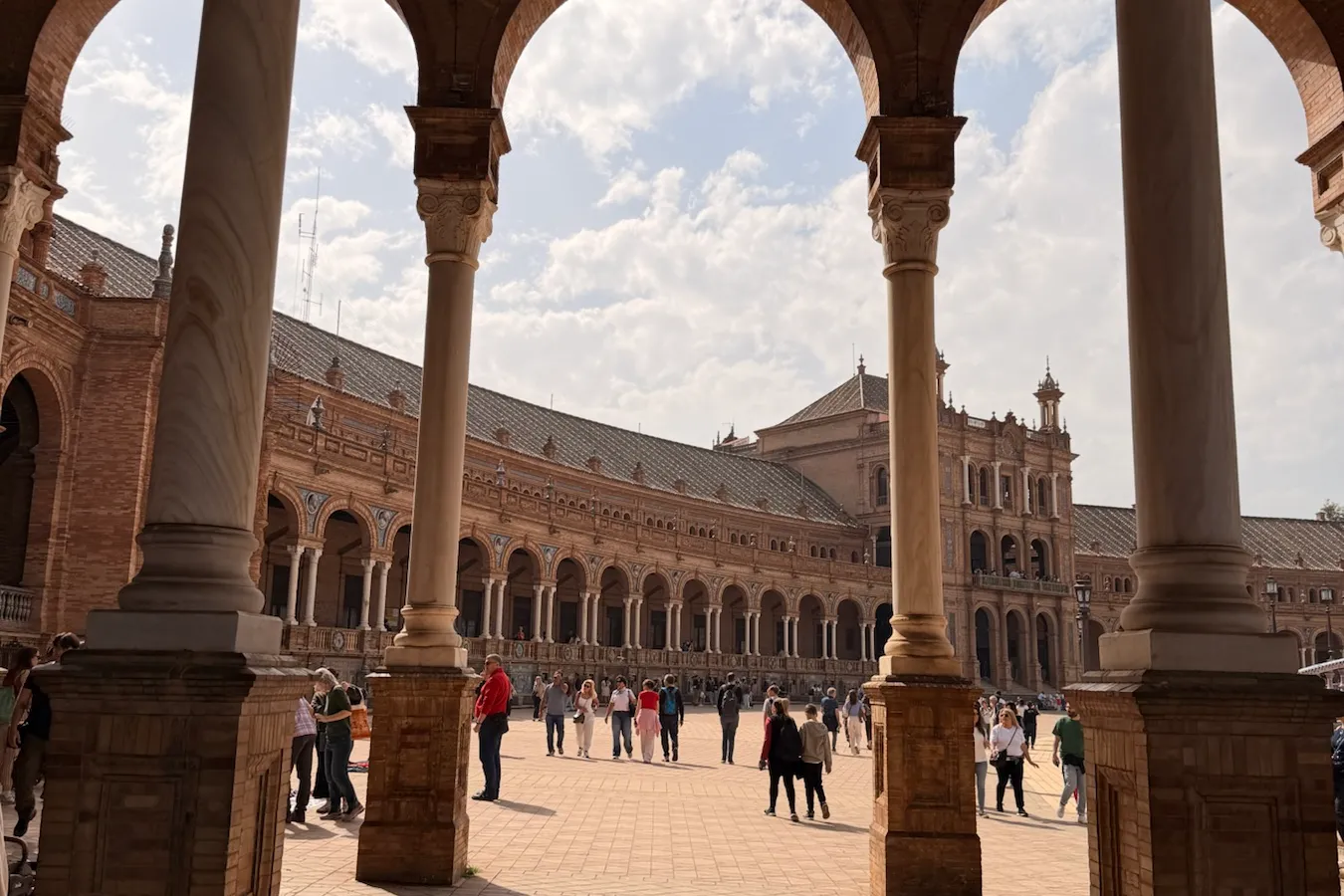
We went to Plaza de España first thing on our first full morning in Seville, and it’s the most beautiful thing in the city that costs nothing to walk into 🤩 It’s ginormous, the tiling and the colours are jaw-dropping, and we ended up staying most of the morning before drifting into the park next door until early afternoon. Here’s what’s there, when to go, and what’s worth booking around it.
I’d give it a first morning, so drop it into my 2 days in Seville itinerary, 3 days in Seville itinerary, or 4 days in Seville itinerary. My Seville city hub has the rest of the city if you’re still filling in days.
What is Plaza de España
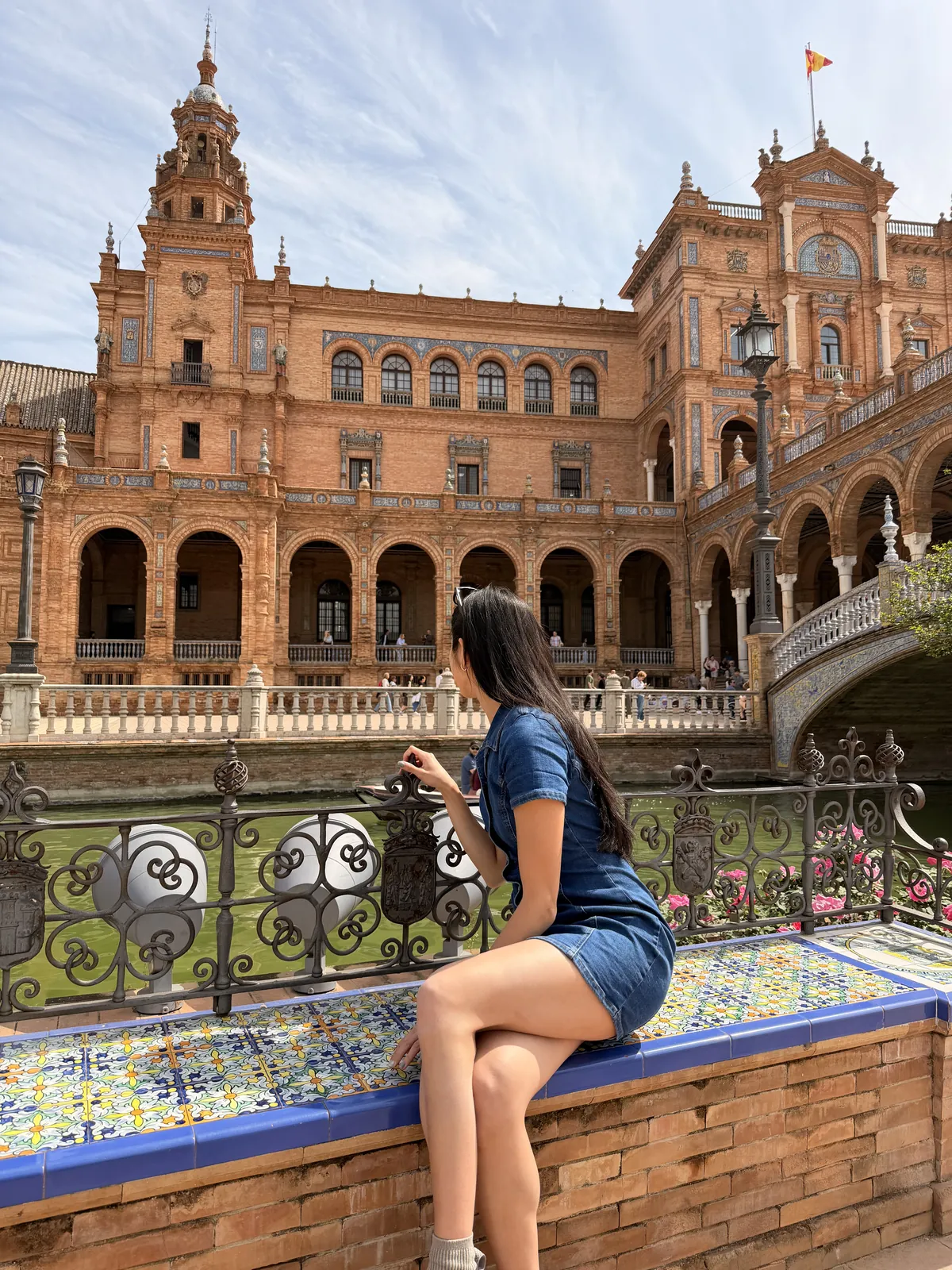
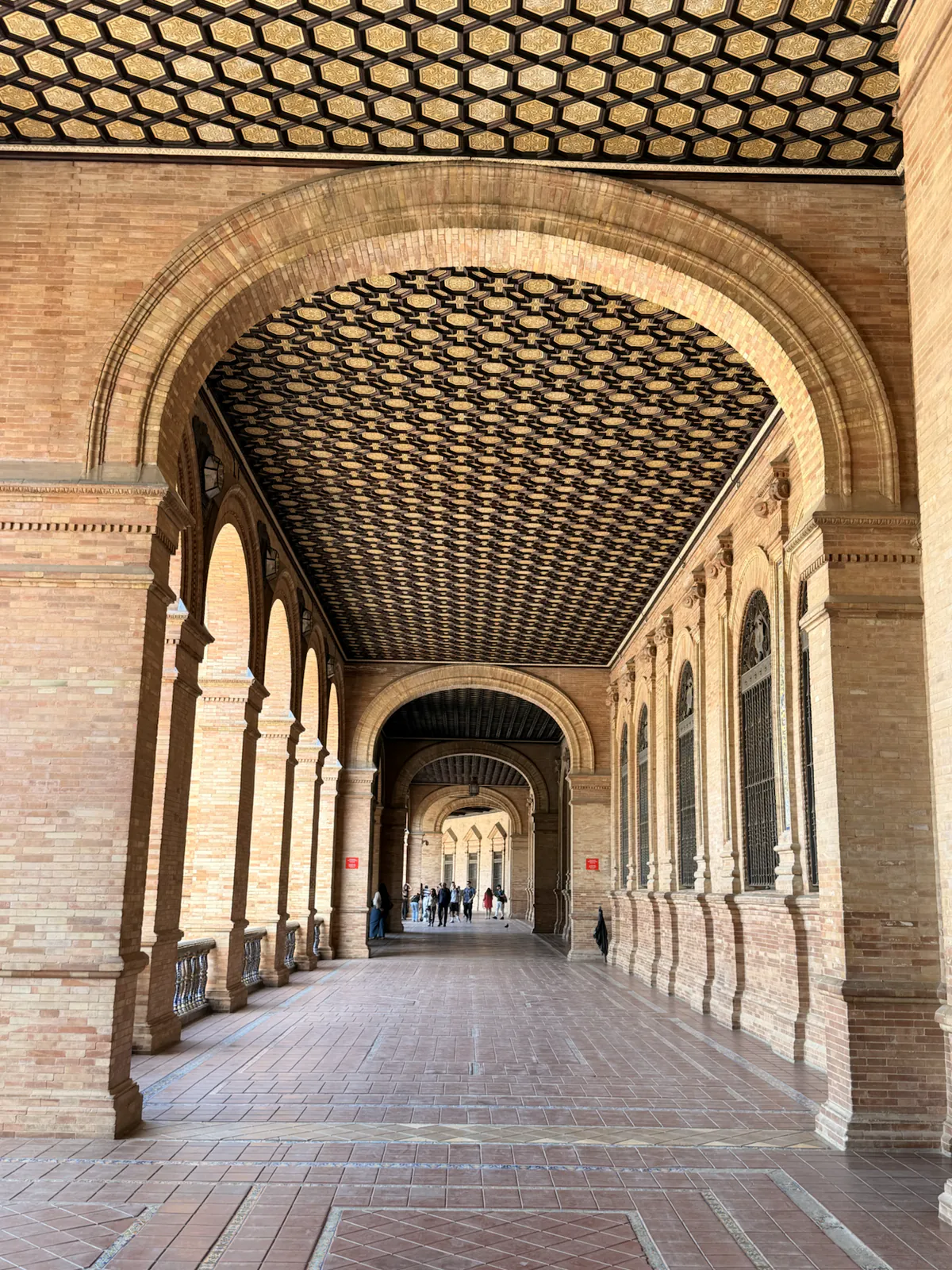
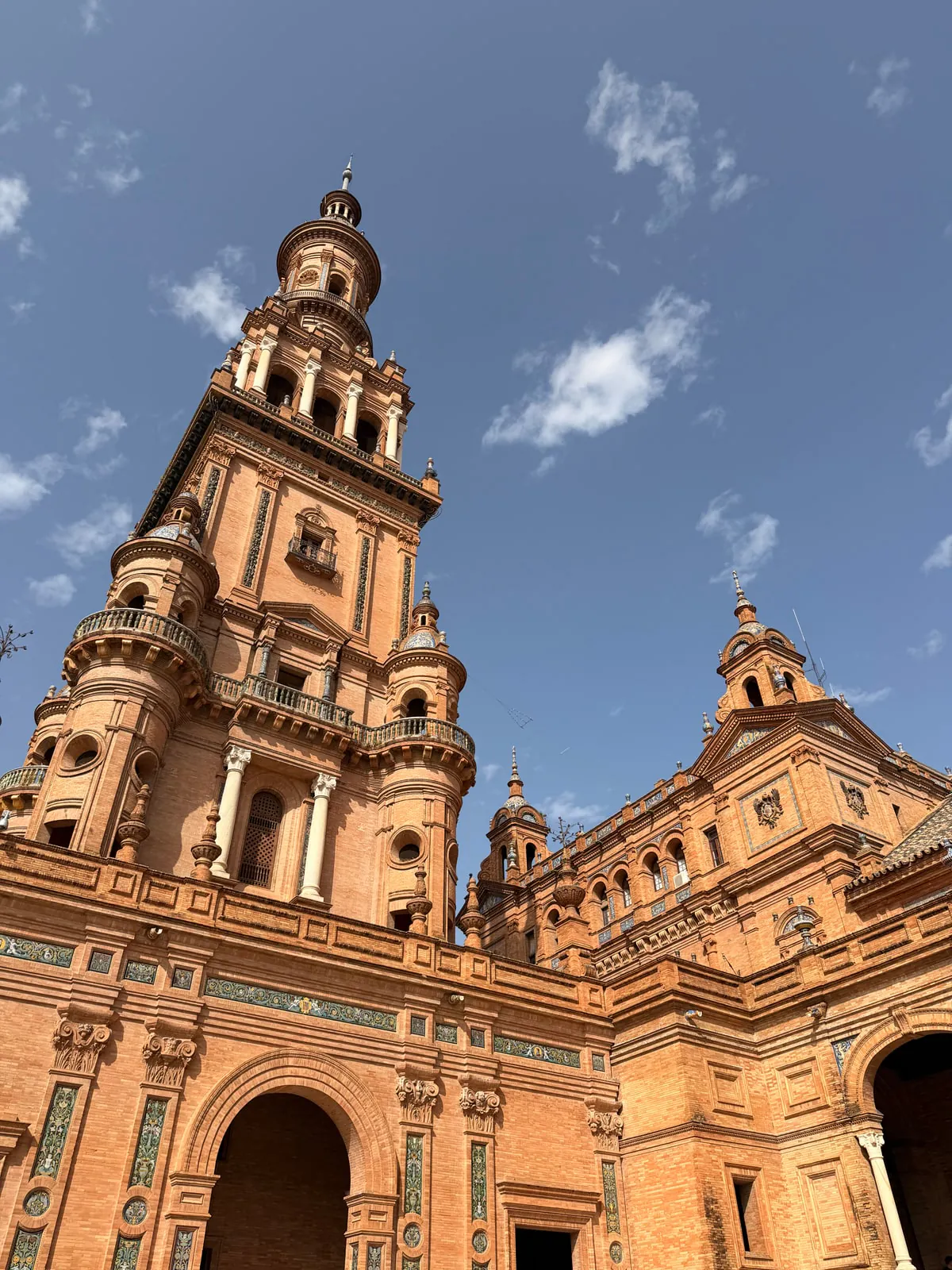
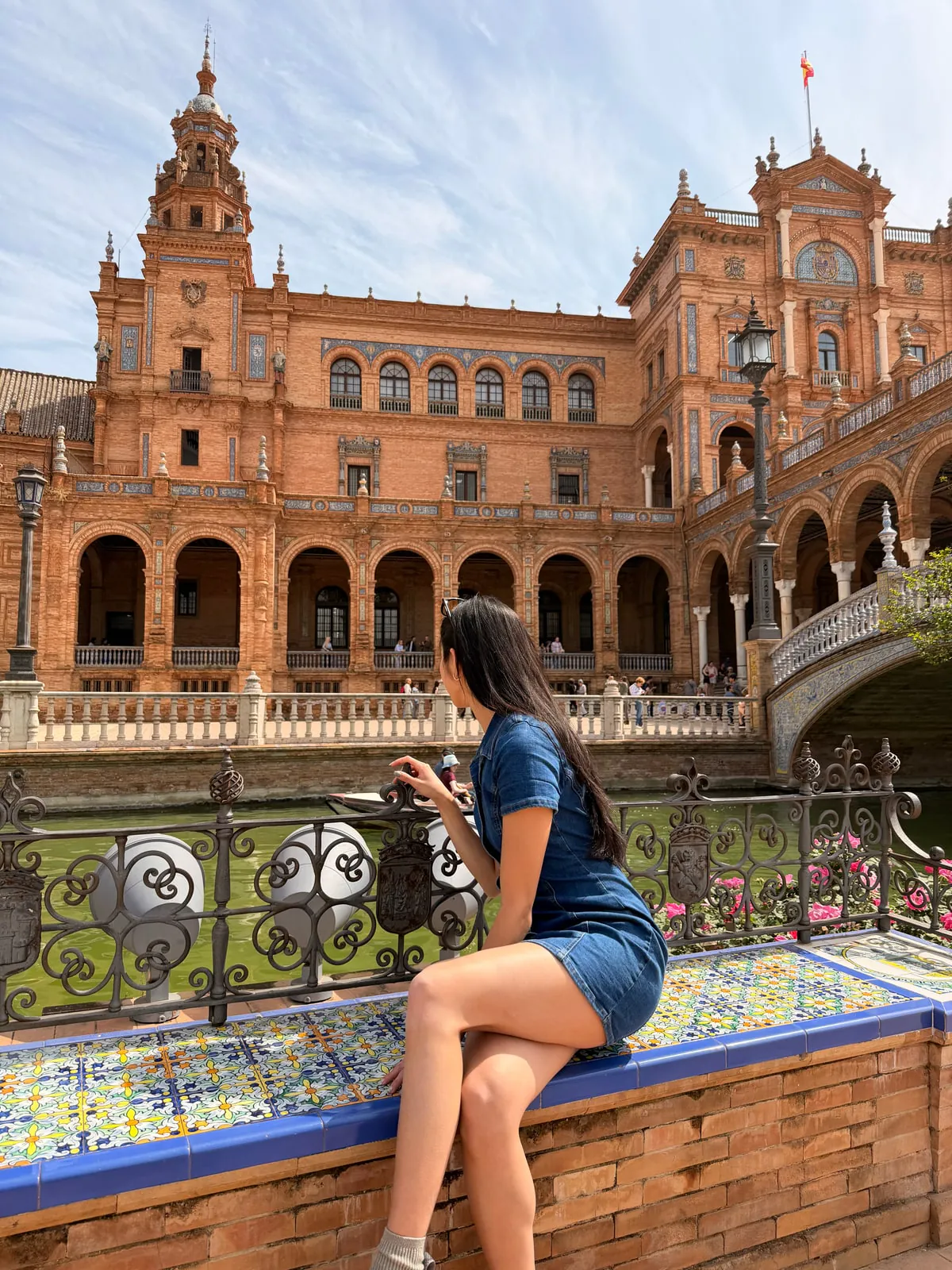
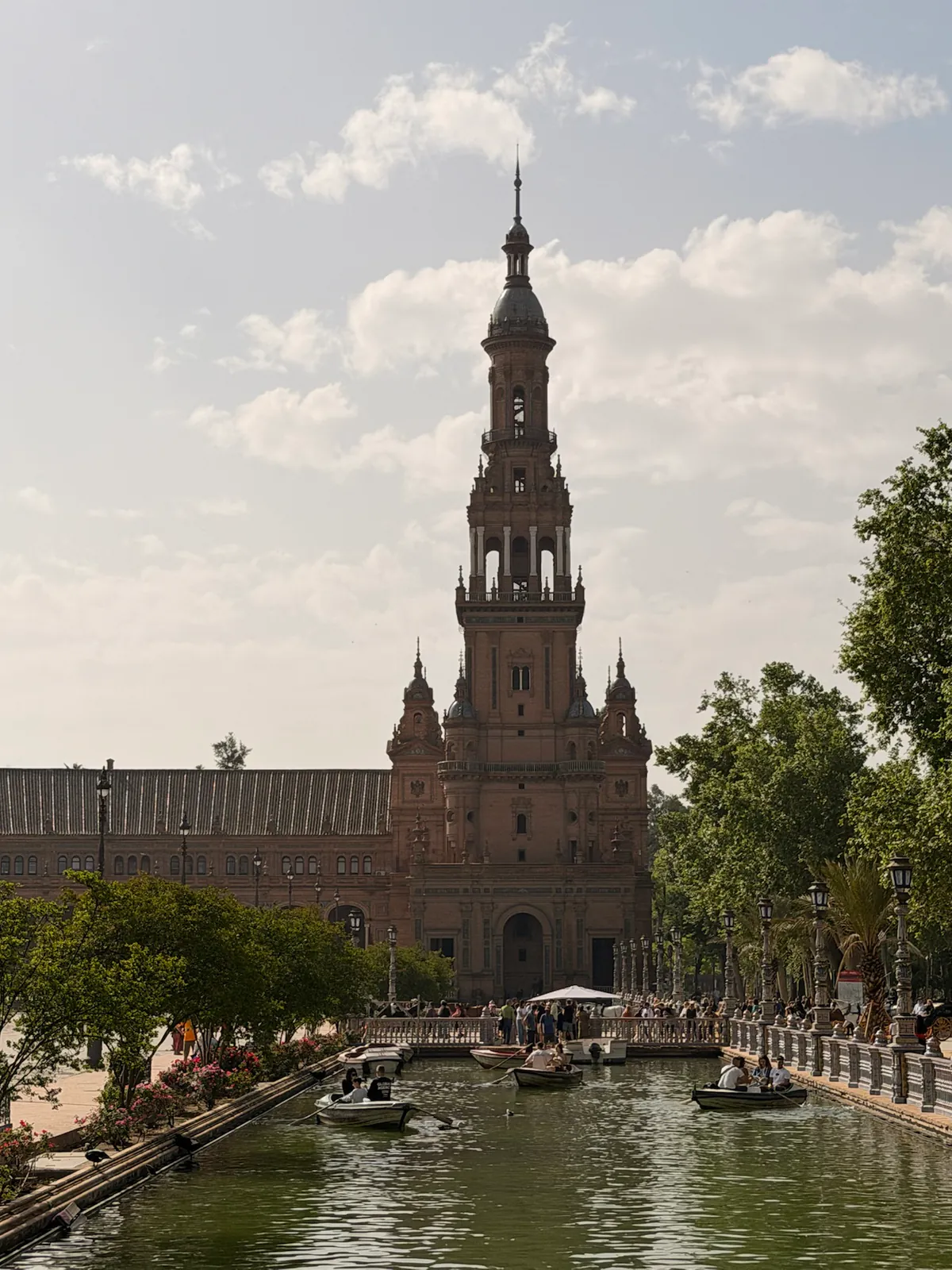
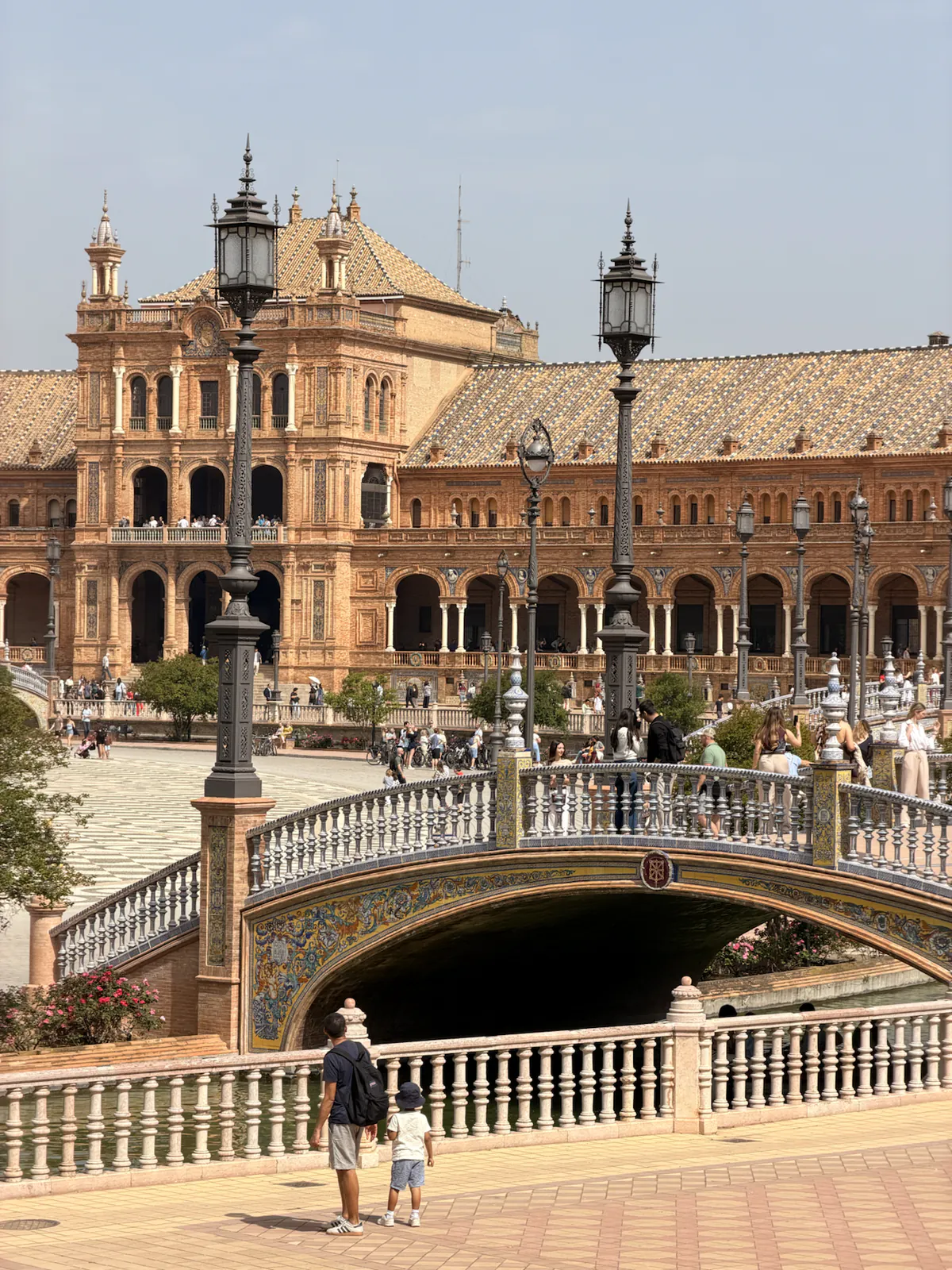
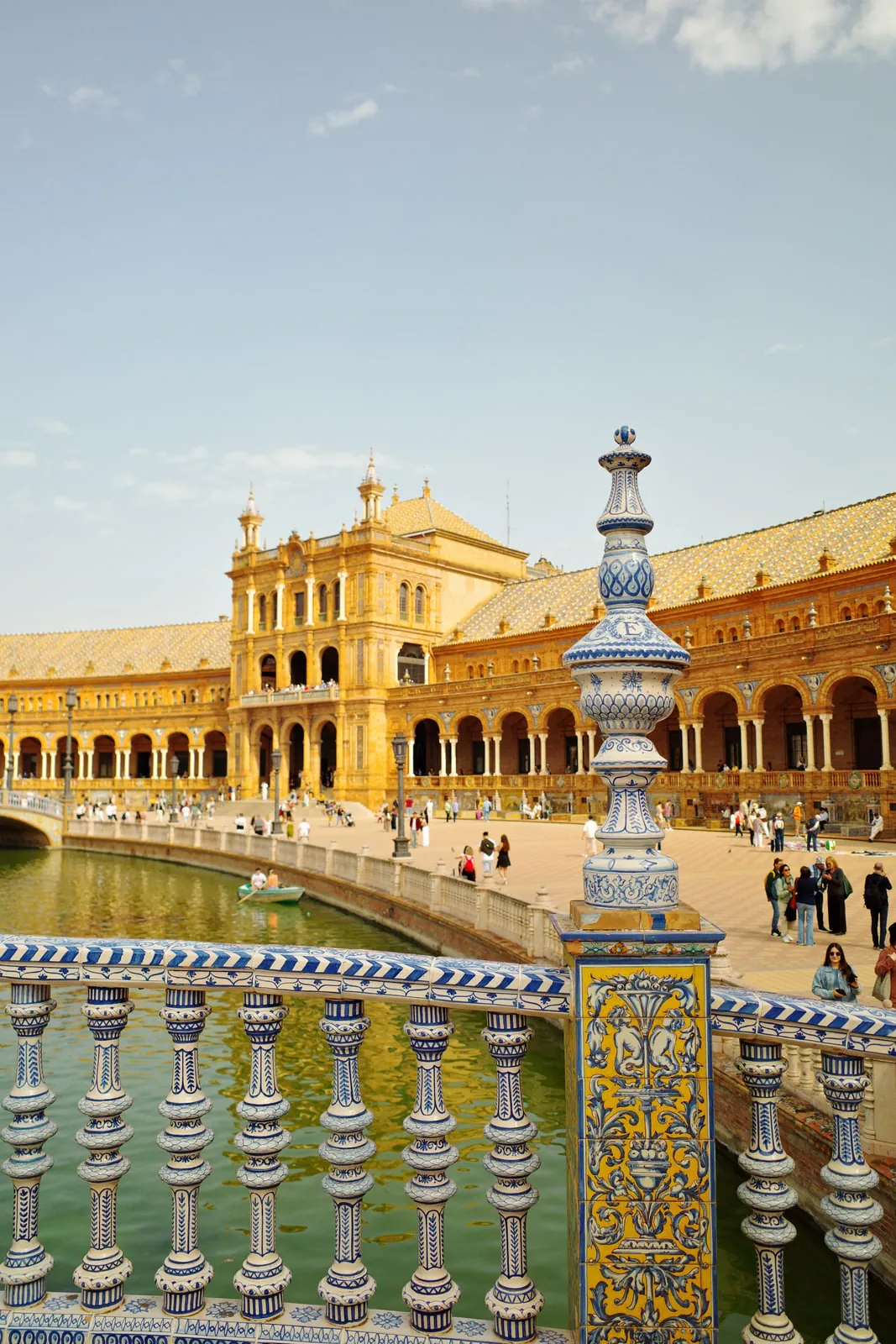
Aníbal González finished it in 1928 as Spain’s centrepiece for the Ibero-American Exposition the following year, and it’s the biggest thing that expo left behind — a semicircle of brick, towers and hand-painted ceramic covering nearly 46,000 square metres, curved so the country looks like it’s opening its arms to the Americas. Four bridges cross the canal for the ancient kingdoms of Spain.
The buildings themselves are government offices these days, so the visit is everything outside.
Star Wars fans, this is Theed 🌌 The exteriors of Padmé’s home city on Naboo were shot right here for Attack of the Clones, and the plaza shows up in Lawrence of Arabia too.
The 48 province alcoves
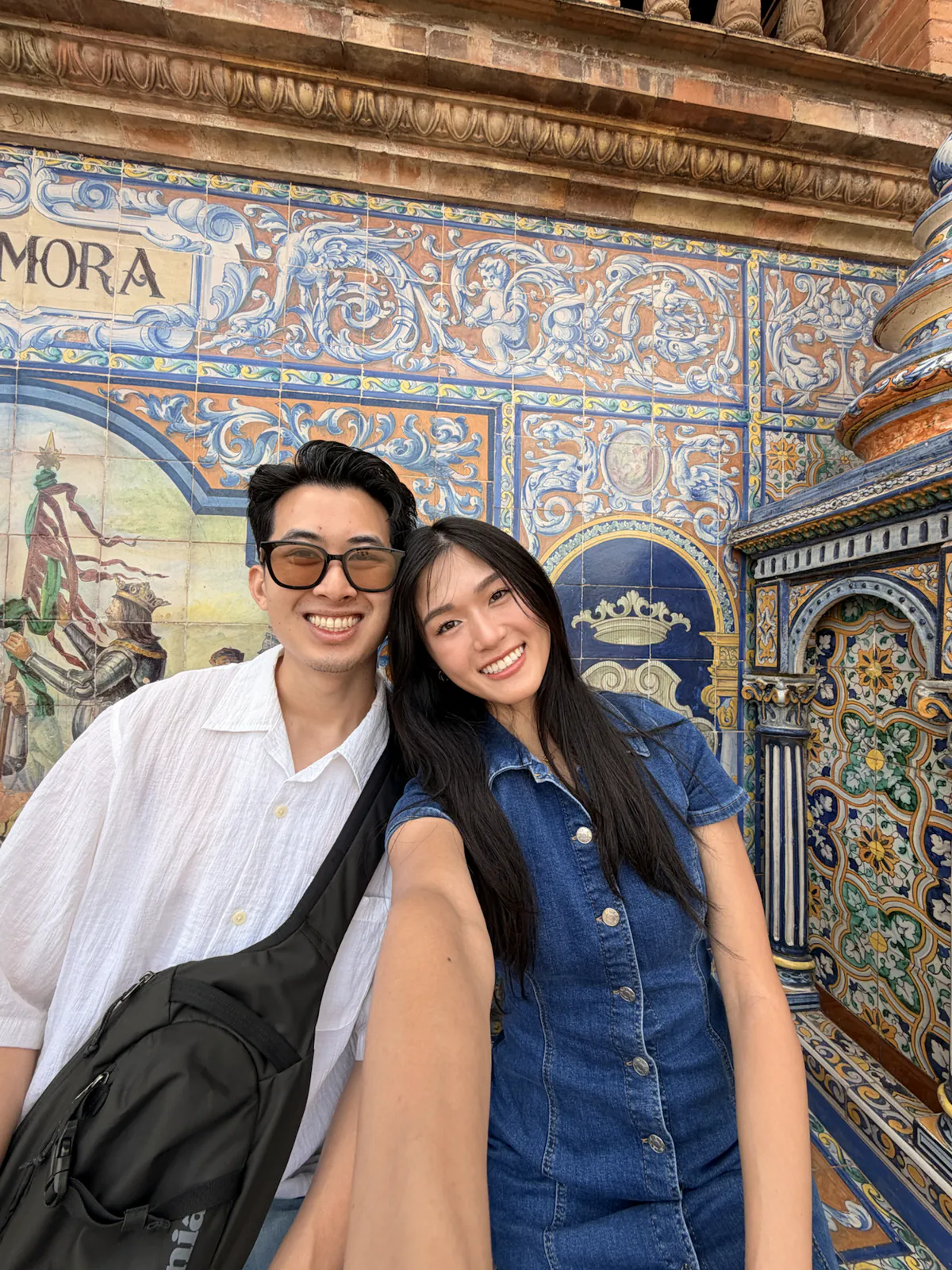
Set into the curve of the building are 48 alcoves, one for every province in Spain, and they’re the reason to give this place longer than a photo stop. Each one carries a hand-painted tile map of its province, its coat of arms, and a scene from its history, built into a bench with tiled sides. They run alphabetically end to end.
What to do once you’re inside
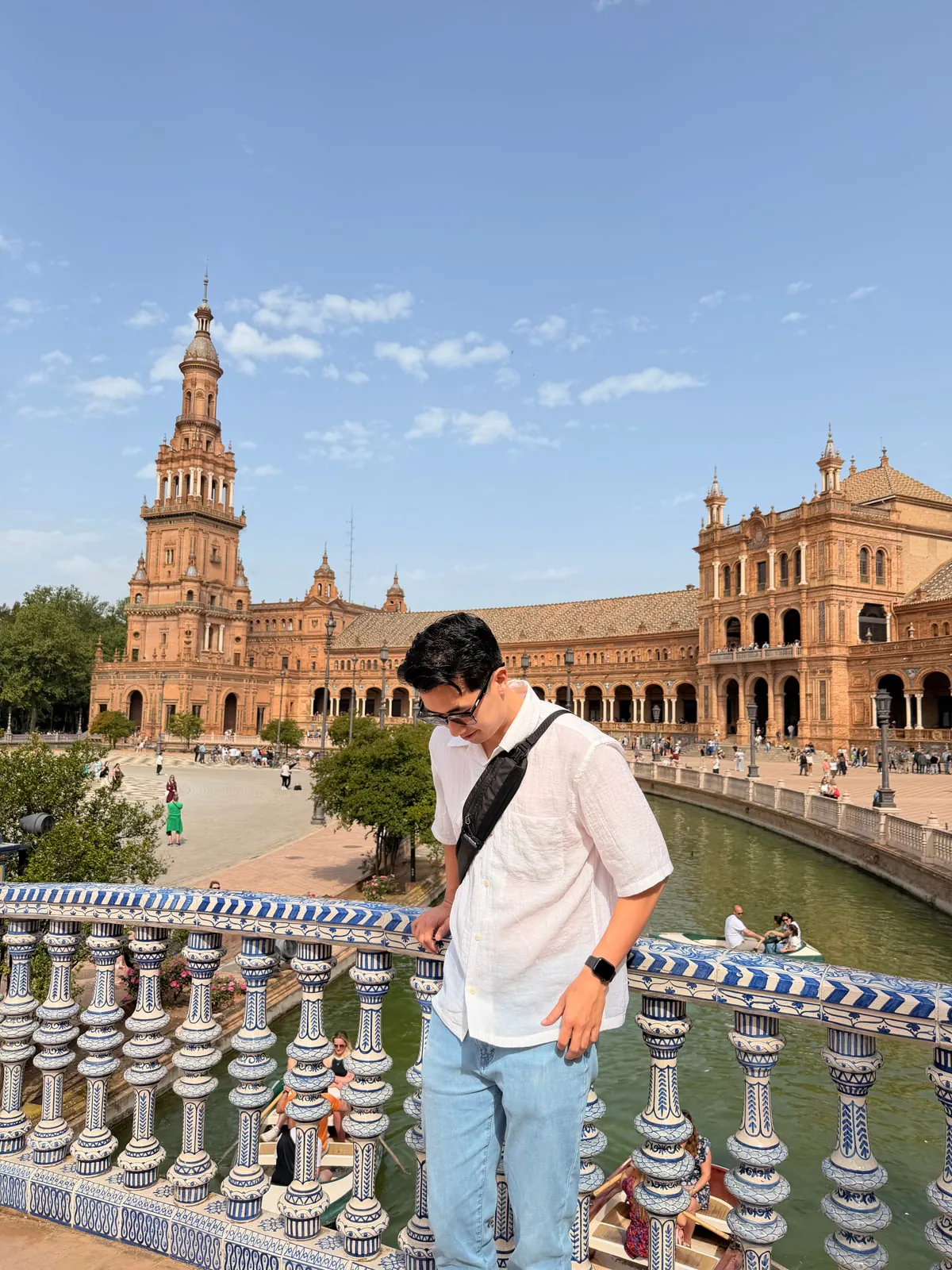
Get up onto the bridges. They’re the best vantage point in the plaza and they put the ceramic work right under your hand — the balustrades are tiled the whole way along, which never registers from across the water.
Down on the canal you can take out a rowboat, which is a lovely way to see the building from the middle of it. It runs about €6 for 35 minutes, up to four people, cash or card at the kiosk by the water. We passed the queue twice and it never looked long, though check the board when you’re there because the rates move.
Then listen for flamenco. Buskers set up around the plaza, and in one morning we caught two flamenco performers and two musicians who were all seriously good 💃 Carry a few euros in cash, because if you stop and watch, you tip.
María Luisa Park next door
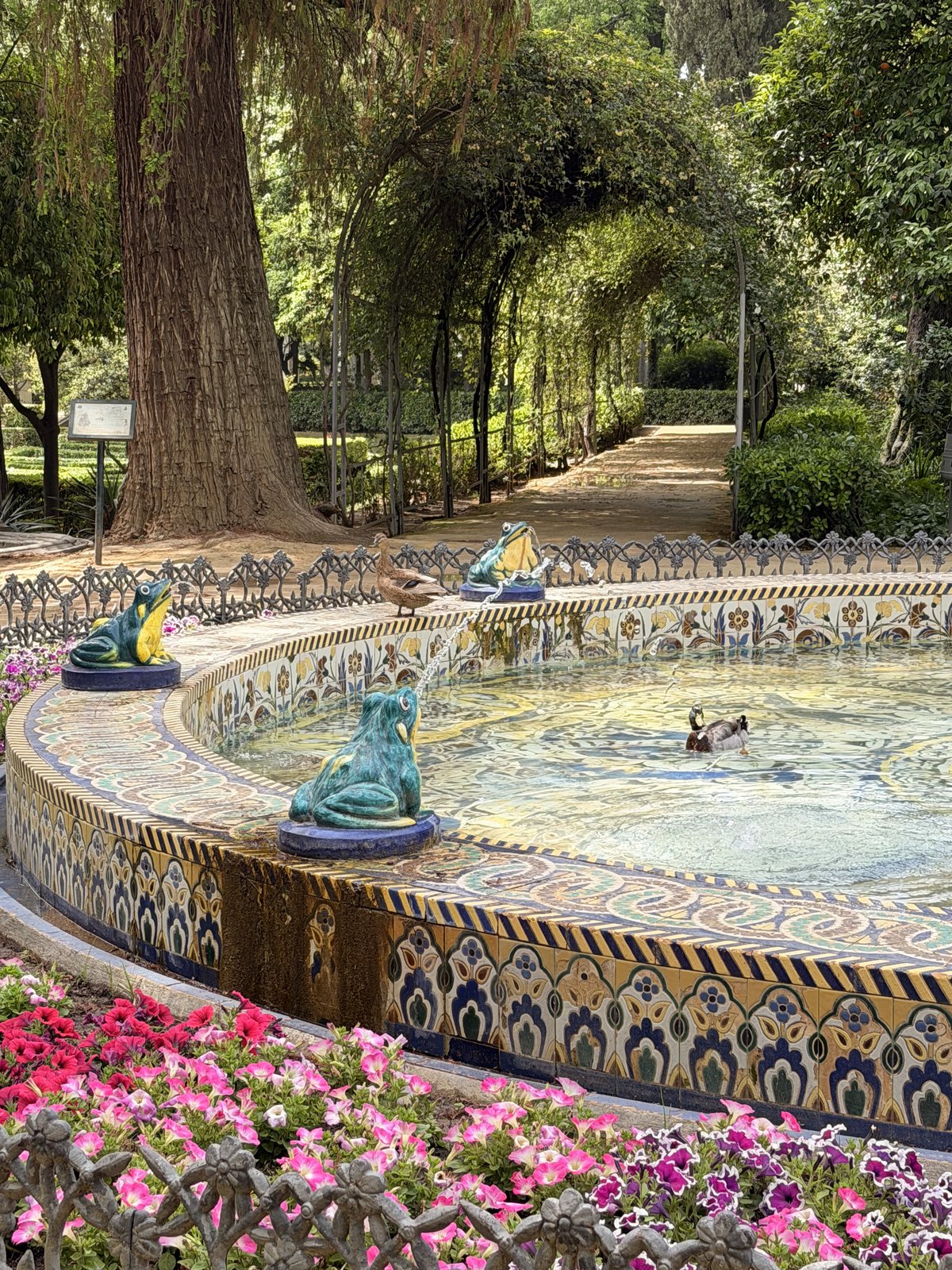
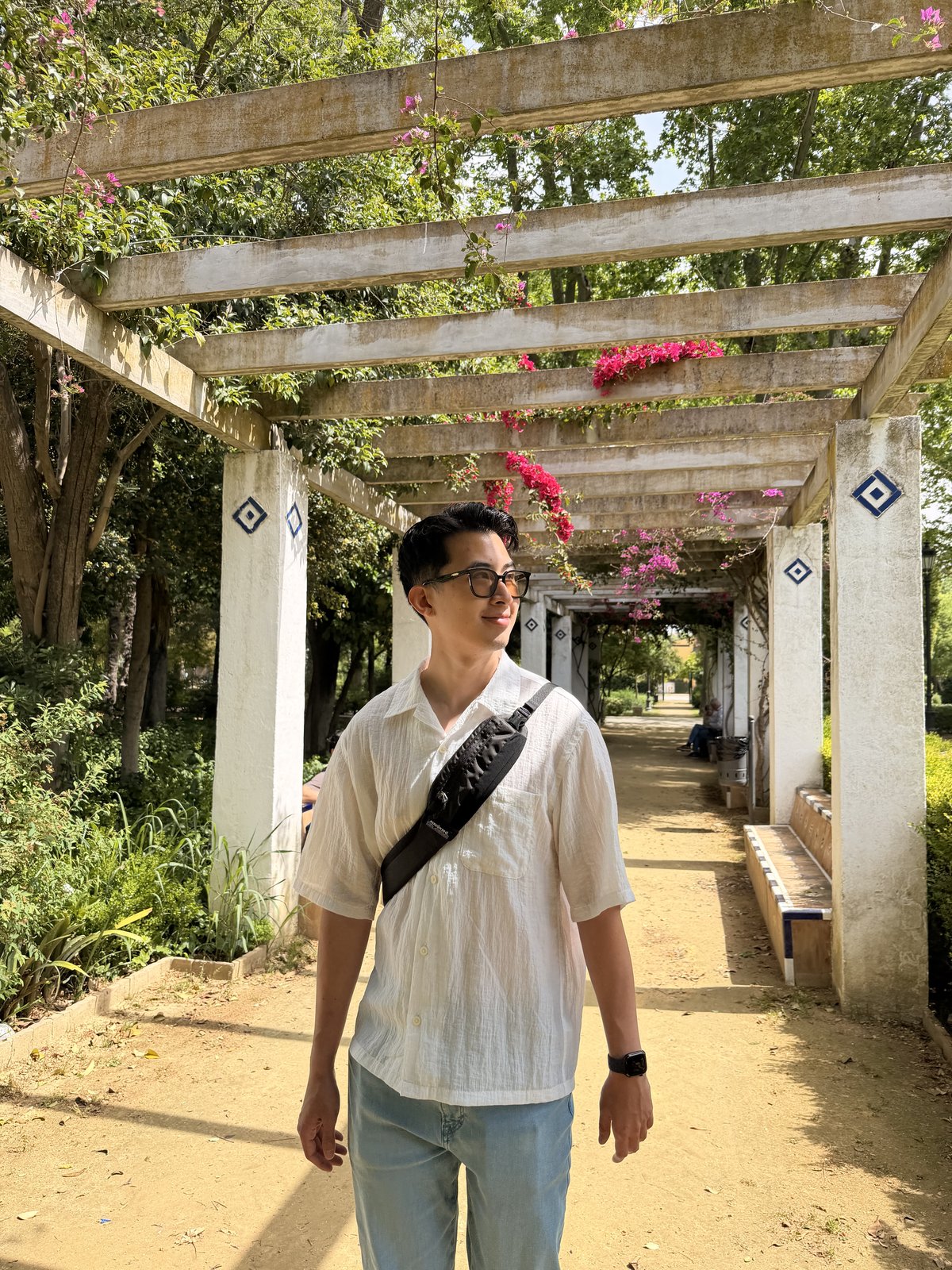
The park is right across from the plaza so definitely check it out. It’s beautiful fountains, tiled corners and long avenues of trees. Perfectly shaded for a lovely stroll or picnic or just to get away from the hot Seville sun.
We went in April and the orange trees hadn’t come out yet, which is the one thing I’d change about our trip🍊 Half an hour covers it if you’re walking through, an hour if you actually sit down.
What’s worth booking around the plaza
There’s no ticket to buy here, so the only things worth paying for are how you get around it and where the evening goes.
Seville is flat, and an easier city to cycle than most old European ones. The paths through María Luisa Park and around the plaza are paved and shaded most of the way, and a guided ride ties the plaza to the river, Triana and the Cathedral into one morning rather than three walks in the heat.
If the buskers land for you the way they did for me, a tablao is a different evening entirely — indoors, a full company instead of one dancer and a speaker, close enough that you hear the floor. Booking it for the night of the day you do the plaza gives everything somewhere to end up.
Travel tips for your visit
The plaza is fenced with gates when it’s not opening hours. They open at 8 AM and close at 10 PM through winter, midnight in summer. Come before 9:30AM on a weekday to enjoy a less crowded plaza as the first tour groups are in by 10.
Give the plaza itself 2 hours — the arcades, the alcoves, bridges, photos, buskers, and rowboats take some time to soak in and enjoy.
Come back after dark. The lights on the canal and up the towers make it a completely different building, and a second visit costs you nothing but the walk!
Getting there is a flat 20 to 25 minute walk from the Cathedral straight down Avenida de Isabel la Católica, or a short tram ride to Prado de San Sebastián. Because the plaza sits at the top of María Luisa Park, doing the Royal Alcázar earlier the same morning turns the day into a single loop instead of two trips across town. And if you want breakfast first, JESTER on Puerta de la Carne was my favourite thing I ate in the whole city — the açaí bowl was so good I bought bags of their granola to bring home.
Plaza de España Seville FAQ
Is Plaza de España free to visit? Yes — it’s open-air and there’s no ticket as of 2026, which is a big part of why it’s such a good first morning in Seville.
What are the opening hours? The gates are open 8 AM to 10 PM in winter, and 8 AM to midnight in summer.
How long do you need? An hour for the plaza on its own, two to three if you’re adding María Luisa Park, a rowboat, or a slower wander along the alcoves.
What’s the best time to visit? A weekday before 9:30 for space and soft light, golden hour for photos, after dark for atmosphere. In hot months, skip the middle of the day.
How much is the rowboat? Around €6 for 35 minutes with a €4 refundable deposit, up to four people per boat, sold at the kiosk by the water in cash or card.
Can you see flamenco at Plaza de España? Often, but never on a timetable. The performers are buskers working the plaza for tips, so what you get comes down to the day you’re there — worth hoping for, not worth planning around.
What are the 48 alcoves? One tiled bench for each Spanish province, each with a painted map, a coat of arms and a scene from that province’s history, running alphabetically around the curve.
Is Plaza de España in Star Wars? It is — it played the exteriors of Theed on Naboo in Attack of the Clones, and it also appears in Lawrence of Arabia.
How do you get there from the Cathedral? A flat 20 to 25 minute walk south down Avenida de Isabel la Católica, or the tram to Prado de San Sebastián.