3 Day Rome Itinerary: Pantheon, Colosseum & Vatican City
A 3-day Rome itinerary: the Pantheon, ancient Rome and the fountains, then Vatican City and Trastevere, then shopping and eating across Rome.
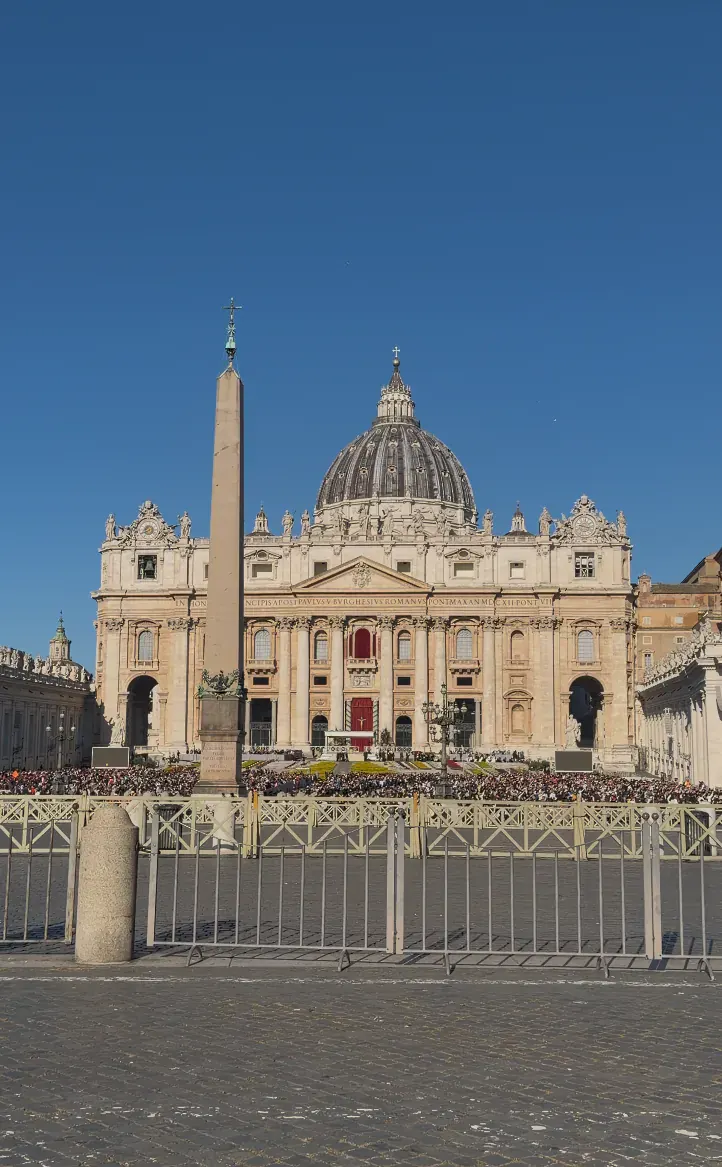
Rome keeps handing you things you weren’t expecting. We were walking across St Peter’s Square with no plan at all, and the Pope came past waving from the Popemobile. I still can’t believe we saw him 🤯 Go while the light is still low, when the colonnades feel enormous and the whole square opens up in front of you. So excited for your trip — I hope this makes planning easy ✨
— wish you were here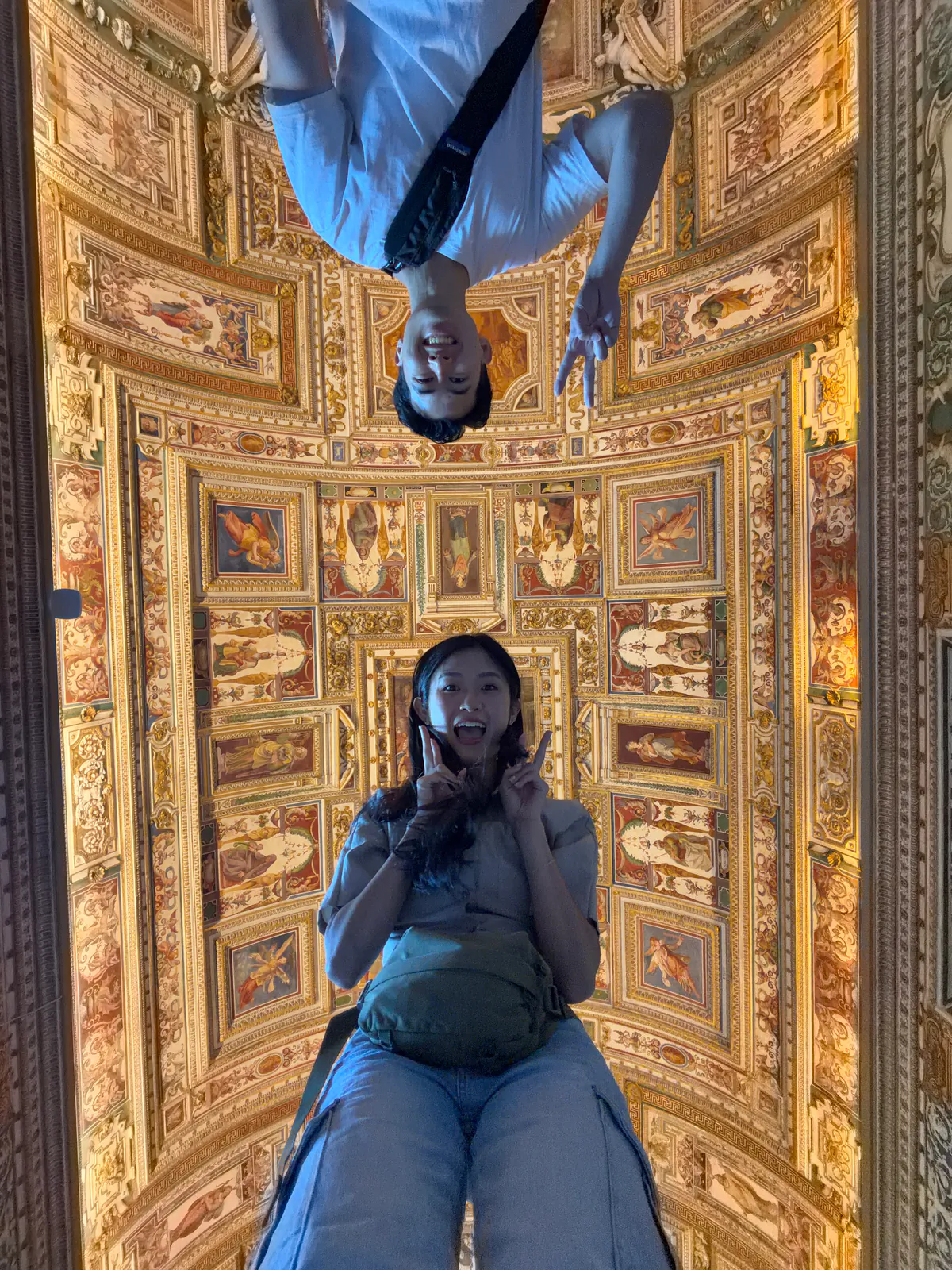



Day OneAncient Rome
Today we're starting at the Pantheon, then walking into the ancient core for the Colosseum, Forum and Palatine Hill. From there we'll continue to the Altar of the Fatherland, Trevi Fountain and the Spanish Steps before dinner at Campo de' Fiori.
- Centro Storico · Colosseo · Trevi
- 8 stops
 knocked out 😴
Stop 18:00 AM~ 2 hours
Arrive in Rome
We came into Rome by train from Florence which was about 1 hour 35 minutes. We bought Italo tickets online. Finding stations and finding your train platform is especially simple with Italo. You can use the link below to find all sorts of different ways to arrive in Rome based on where you're coming from and compare prices easily!
- Arriving before check-in or leaving after checkout? Termini's left-luggage office is a walk down platform 24, so you can drop your bags and go. learn more (opens in a new tab)
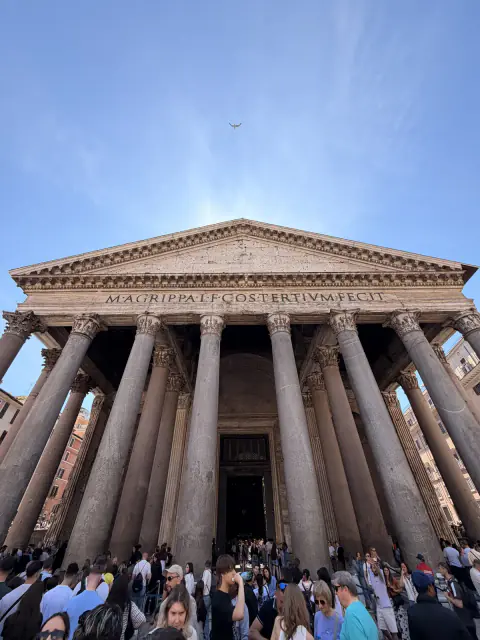 the pantheon 🏛️
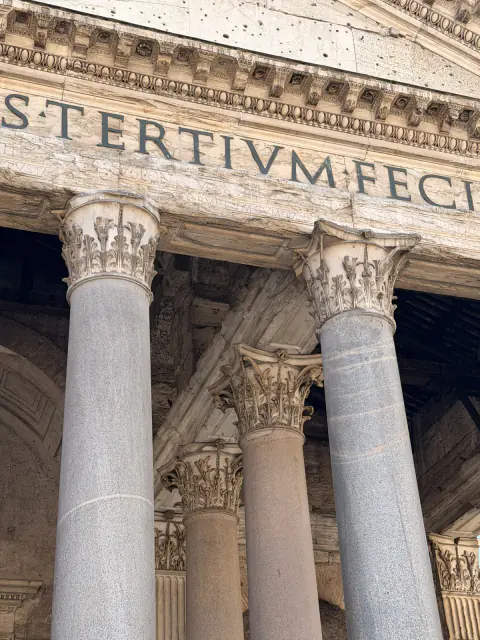 up close
Stop 210:00 AM~ 1 hour
Pantheon
The Pantheon is one of the most well-preserved ancient Roman temples in the world. It's known for its perfectly symmetrical shape - 43 meters in height and in width. The only light comes through the oculus, a nine-meter hole open to the sky, with drains in the floor for the rain that falls through. Raphael is buried inside, along with some Italian kings. Tickets are no longer free - it's now paid entry. Book below to skip the ticketing line which can get quite long!
Similar Experiences
Fun fact: The oculus is open to the sky, so rain falls straight into the building. There are 22 holes in the floor to drain it away.
Then 23 min by bus to the next stop— or 17 min by car, 30 min on foot
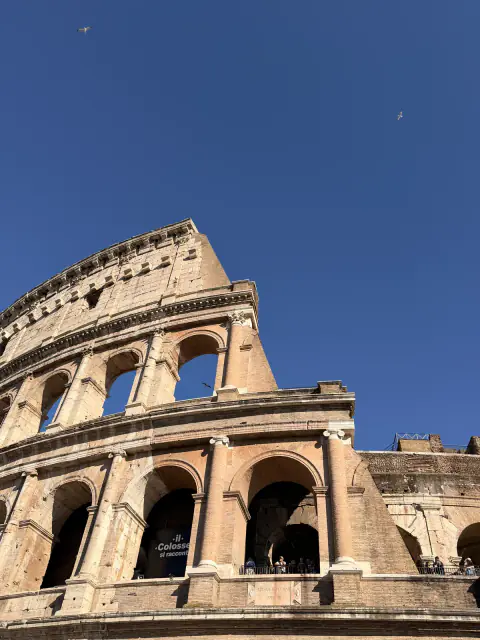 colosseum in all its beauty
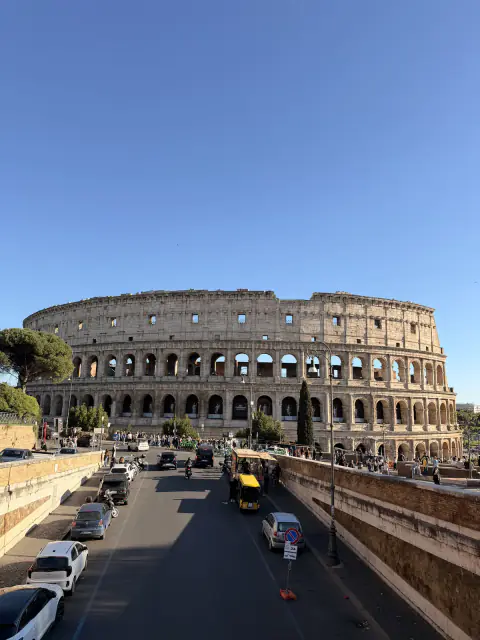 it's huge! 🤯
Stop 311:00 AM~ 2 hours
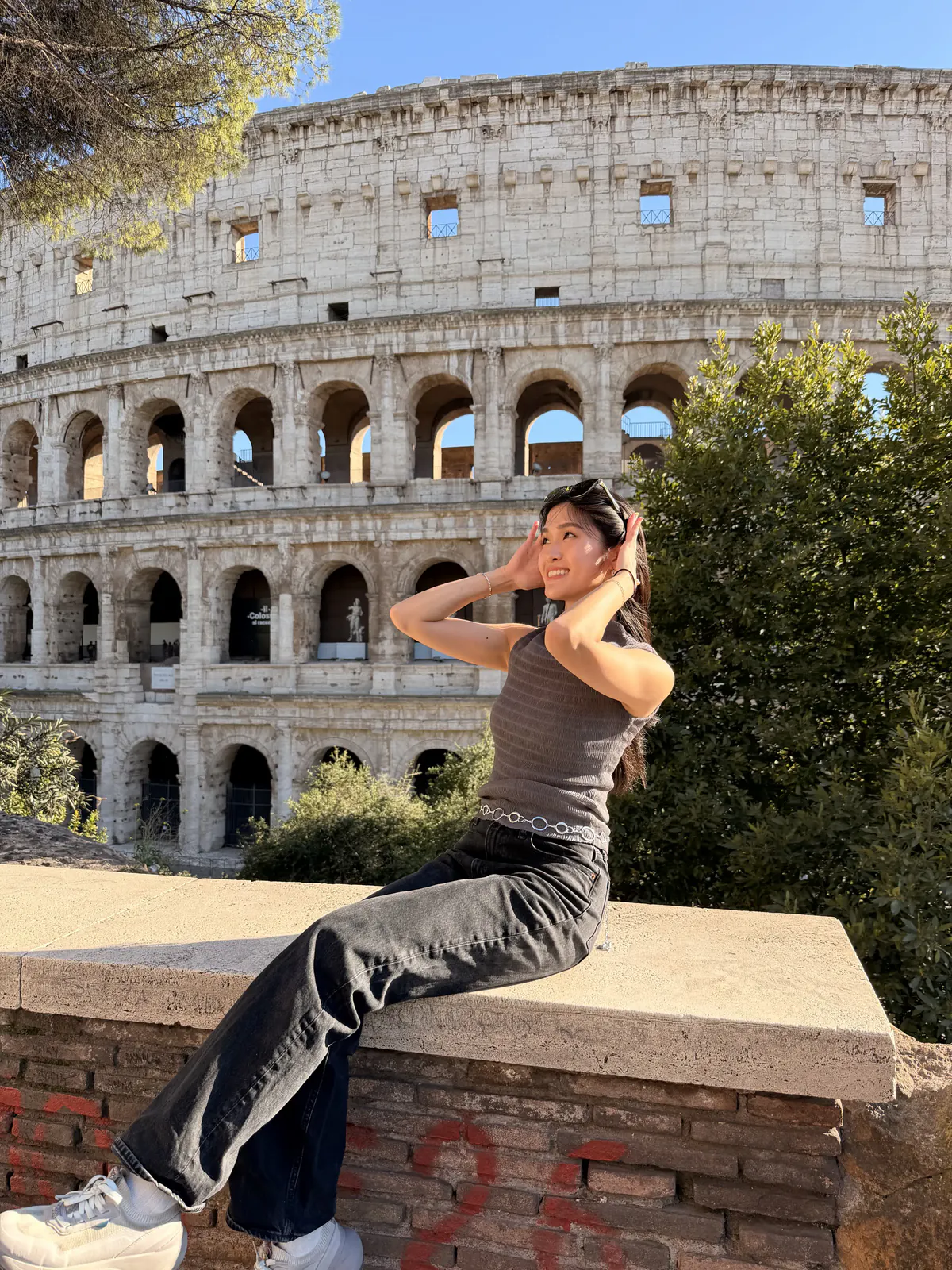
Colosseum
The Colosseum is Rome's enormous ancient amphitheater, and a standard visit includes the 1st and 2nd levels and the Colosseum Museum. You can upgrade to see the arena floor or the underground hypogeum as well. I really think the arena is a NON-NEGOTIABLE. Standing down on the arena floor and looking up at the seats, you can feel the energy and history of the gladiator battles and the roaring crowds. 🤺
Similar Experiences
- Highly recommend looking for tickets with 1st floor, 2nd floor, AND the arena. Beware of arena-only tickets!
Then 13 min walk to the next stop
![Related experience: [Rome] Colosseum, Roman Forum + Palatine Hill Tour with Optional Arena](/itinerary/photos/affiliate-382863b017e9bdca280e-93f09f2ace03-w180.webp) Roman Forum and Palatine Hill
Roman Forum and Palatine HillStop 412:30 PM~ 3 hours
Roman Forum and Palatine Hill
The Roman Forum is the sprawling field of ruins at the heart of ancient Rome, where public life unfolded for more than a thousand years. From there, you’ll climb the Palatine—the hill just above it—where Rome’s emperors once lived. At the top, you can peek inside the House of Augustus and its Room of the Masks, then wander through the Renaissance-era Farnese Gardens overlooking the ruins.
- The Forum and the Palatine have separate gates — the Forum at Largo della Salara Vecchia 5/6 and the Palatine at Via di San Gregorio 30 — and Metro line B to Colosseo drops you near both.
Then 13 min walk to the next stop
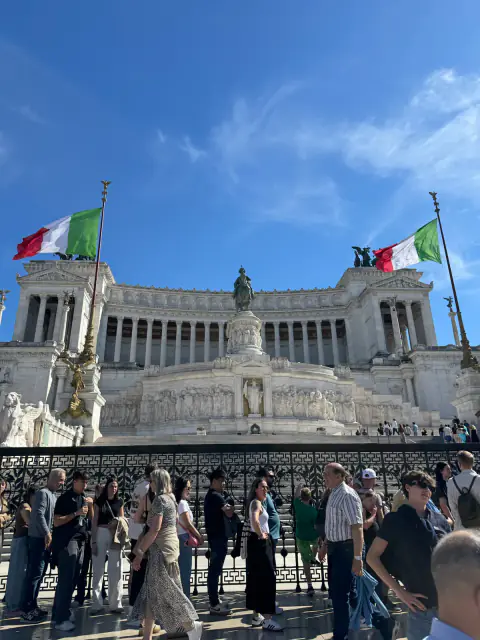 the altar 🏛️
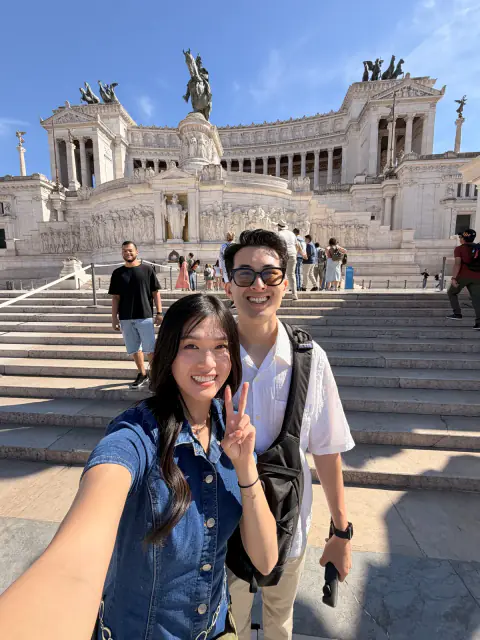 it's ginormous!
Stop 53:30 PM~ 1 hour
Altar of the Fatherland
The Altar of the Fatherland is an ENORMOUS white marble monument in the center of Rome, built for Italy's first king, Vittorio Emanuele II. It has held the country's Tomb of the Unknown Soldier since 1921, and the guard there changes every hour. This was honestly one of my favorite monuments in the city, and it's free — a quick security line and we walked right in. It's ginormous, with room to wander, and from the top there's a beautiful view across Rome all the way to the Colosseum and the ruins. 🤍
- It's free entry! The €18 VIVE ticket allows you to take a lift all the way to the very top (although the free terrace already offers amazing panoramic view of Rome). It also includes admission to the museums in the monument. tickets (opens in a new tab)
- If stairs are a problem, use the Aracoeli-side entrance: there's a wheelchair lift up to Terrazza Italia. accessible entrance (opens in a new tab)
Then 17 min walk to the next stop
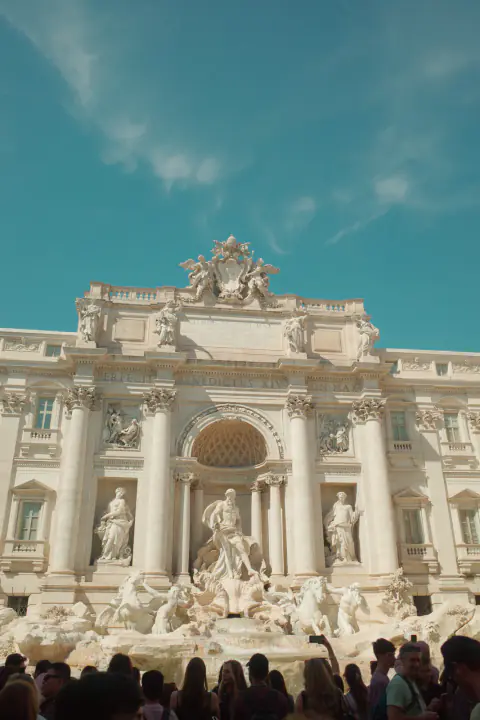 the fountain ⛲️
Stop 64:30 PM~ 1 hour
Trevi Fountain (Fontana di Trevi)
The Trevi Fountain marks the end of the ancient Aqua Virgo aqueduct, with the god Oceanus riding a shell-shaped chariot through a dramatic cascade of water. The crowds were so thick that I couldn’t get close enough to toss in a coin, but it was still beautiful—even from afar. Tradition says that throwing one coin over your shoulder promises a return to Rome ⛲. And here’s something most people don’t know: you can actually head underground to explore the ancient aqueduct beneath the fountain!
Similar Experiences
Fun fact: The water still arrives through the Virgo aqueduct, the only ancient Roman aqueduct that never stopped running. The fountain is basically the end of its line.
- You'll wanna come around 4 am if you want to catch the fountain without a crowd. 🌃
Then 9 min walk to the next stop
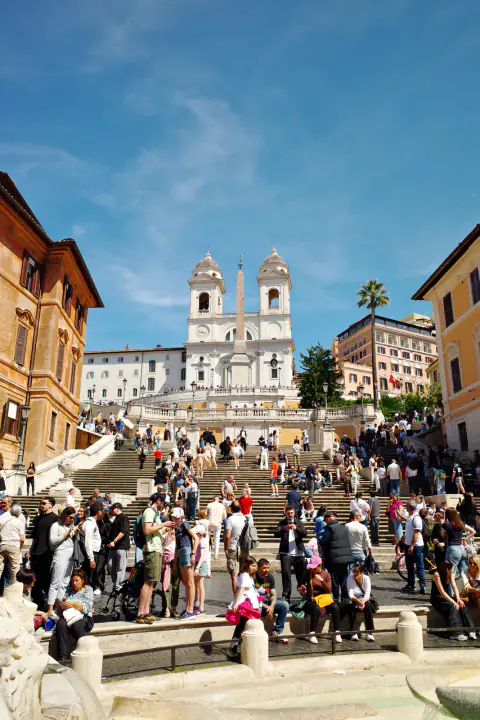 the baroque steps
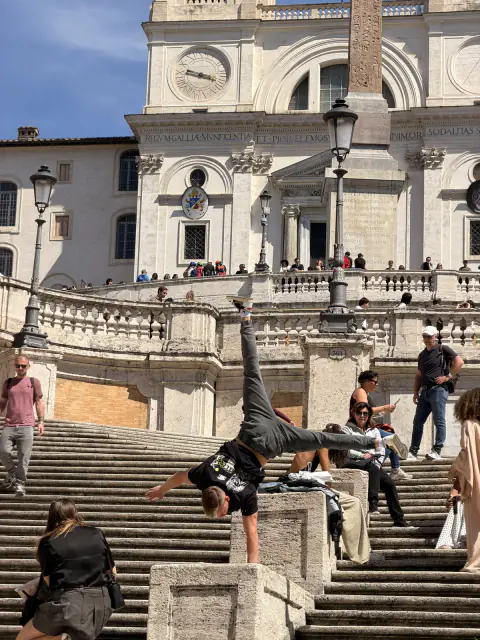 had to capture this! 📸
Stop 75:00 PM~ 1 hour
Spanish Steps
The Spanish Steps are a grand Baroque staircase that climbs from Piazza di Spagna toward the Pincio, with a lovely view waiting at the top. I walked all the way up, and the view over the piazza was well worth pausing for once I got there. You can also visit the Trinità dei Monti church at the top. If you’re in Rome between mid-April and mid-May, around 450 white and lilac azaleas decorate the steps 🌸.
🎟️ Similar Experiences
Fun fact: Bvlgari funded the staircase’s 2015 restoration, which returned the steps to their original appearance in September 2016.
Then 24 min walk to the next stop
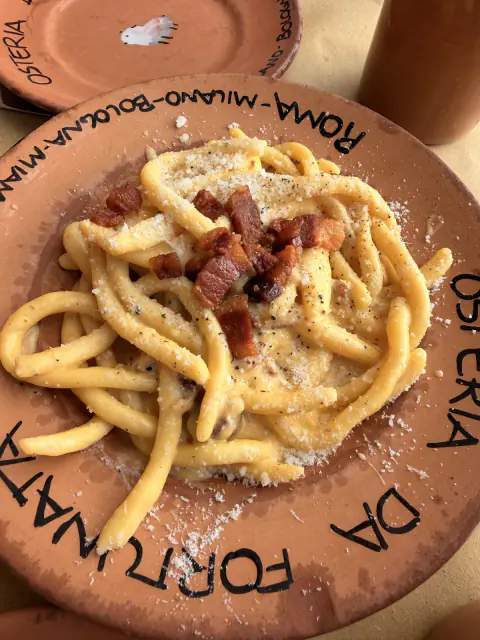 the addicting carbonara
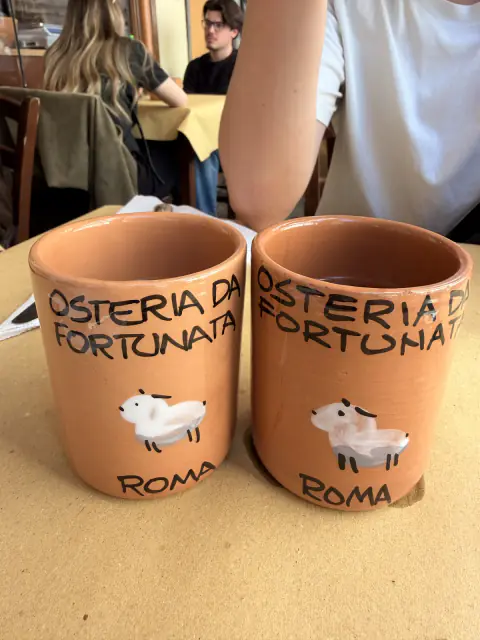 cutest cups ever! ☕️
Stop 86:00 PM
Osteria da Fortunata
Osteria da Fortunata is a handmade-pasta restaurant, where you can literally see the chefs making fresh pasta every morning. Their carbonara is creamy, flavorful and honestly ADDICTING, with really good crispy bacon. We ordered the supplì too, and it had the longest cheese pull of my life. 🧀 The artichoke and the braised oxtail were just as good — a 9 out of 10 for me.
🎟️ Similar Experiences
Fun fact: The family recipes behind the kitchen go back to 1921, and the group still grows its own tomatoes and potatoes for them.
- If the line looks long, the other two Campo de' Fiori branches are a block away at Via dei Baullari 112 and Piazza della Cancelleria 87. We walked right in!



Day TwoVatican City & Trastevere
Today we're doing the Vatican, and we're starting with pastries at Barnum. Then the museums, St Peter's Square, and the basilica with the dome climb. We'll come back over the river to Castel Sant'Angelo for the view from the terrace, then drift into Trastevere for the evening and dinner at CULTO.
- Vaticano · Borgo · Trastevere
- 7 stops
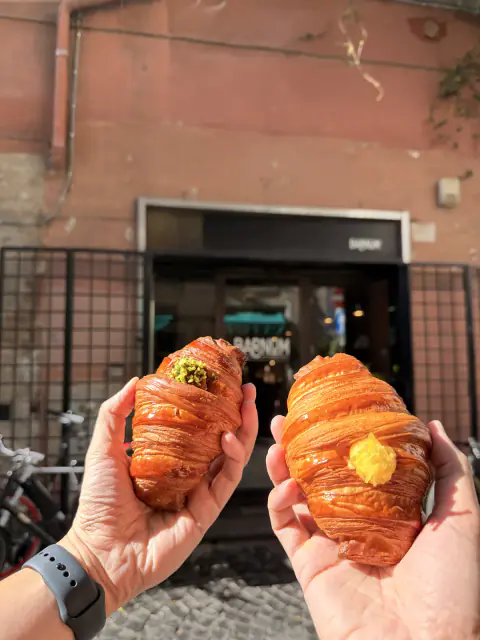 look at those beauties 🥐
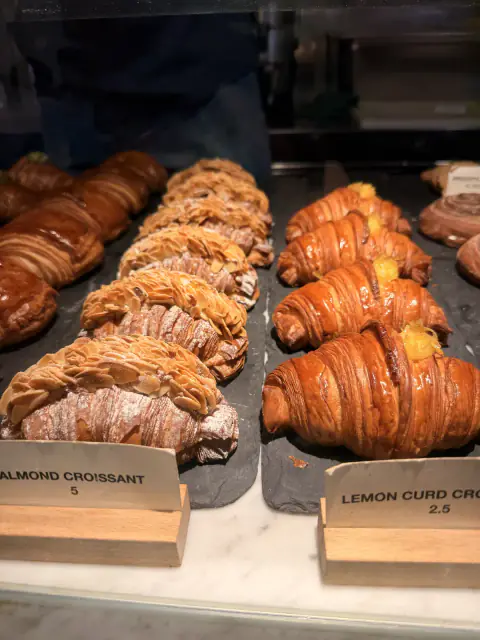 the display
Stop 18:00 AM
Barnum
Barnum is a coffee and breakfast spot on Via del Pellegrino, a block off Campo de' Fiori. The coffee comes from selected plantations, and the counter beside it carries house-made sweets and fresh juice. The cornetti are what I'd go back for. We took a bag to go, and I loved them 🥐 The lemon was my favorite, perfectly flaky, and the pistachio one came filled with pistachio cream. My boyfriend loved the almond one.
🎟️ Similar Experiences
- If you're not looking to dine-in, you can skip the line and head straight to the counter to order a coffee or pastries to enjoy at the counter or for takeout.
Then 25 min walk to the next stop
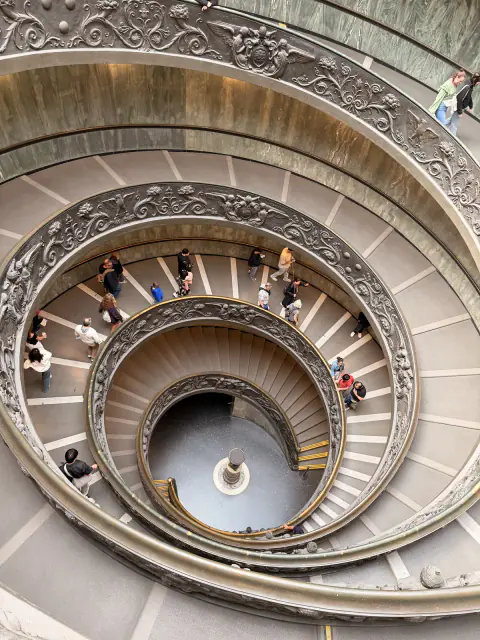 famous spiral staircase 🔃
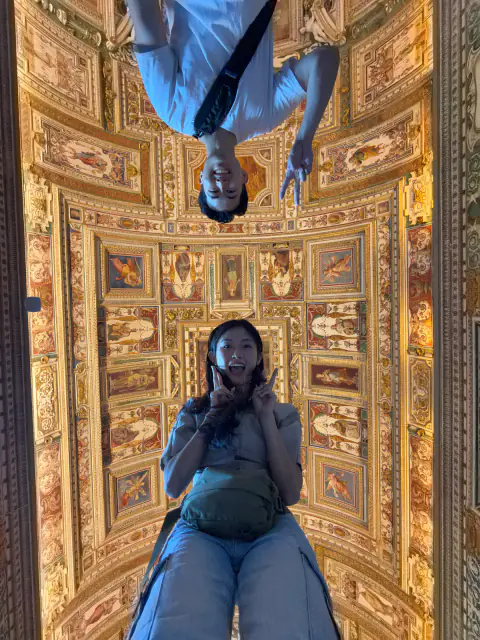 gorgeous ceilings!
Stop 29:30 AM~ 3 hours
Vatican Museum
The Vatican Museums are one long route through the papal collections, and it finishes inside the Sistine Chapel. You pass room after room of painted ceilings and walls that you could literally stair at FOREVER. We saw the first Pope's clothing on the way through, and it's just beautiful in there — one of my top highlights of Rome, for sure. It's amazing how much culture and history sits in every ceiling and wall.
Similar Experiences
- No sleeveless tops, low necklines, shorts above the knee, miniskirts or hats — and rucksacks, large bags, tripods, umbrellas and selfie sticks have to go in the free cloakroom before the galleries.
Then 8 min walk to the next stop
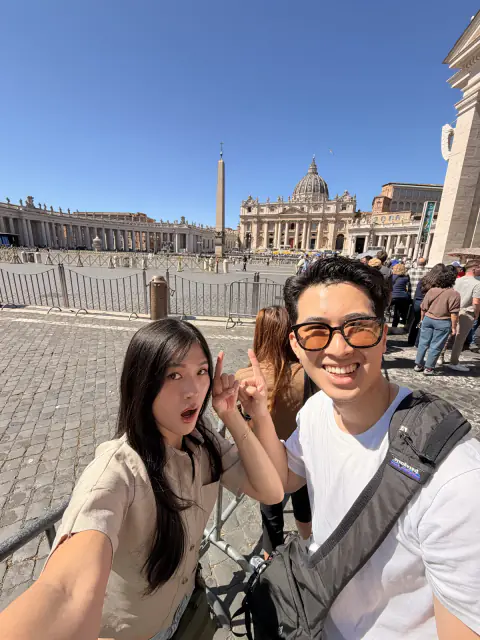 the Pope's mass! 🔔
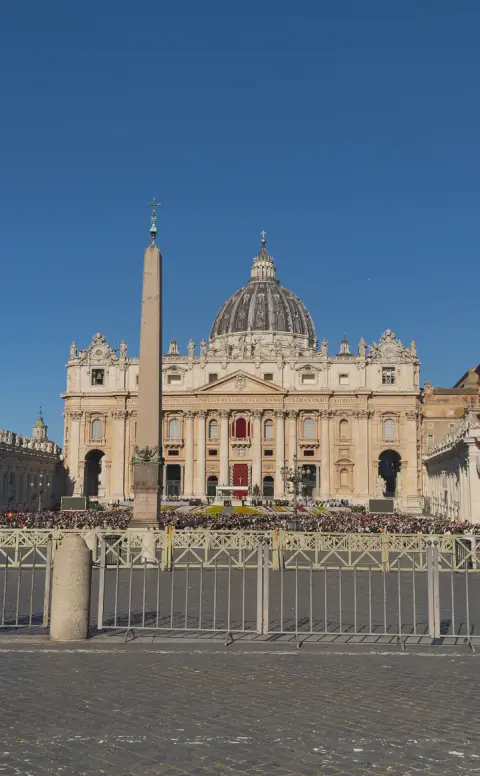 The Basilica
Stop 31:30 PM~ 1 hour
St. Peter Square
St. Peter's Square is the huge oval plaza in front of St. Peter's Basilica, wrapped by two semicircular colonnades built from 284 columns that carry 140 statues over three meters tall. Bernini laid it out this way for Pope Alexander VII so it would open like an embrace. It's also where the Pope gives his Wednesday general audience, and we caught him waving from his Popemobile as he left. I still can't believe we saw the Pope himself! 🤯
- To be seated for the Wednesday General Audience instead of just passing through, request the free tickets from the Prefecture of the Papal Household a month ahead. request tickets (opens in a new tab)
Then 8 min walk to the next stop
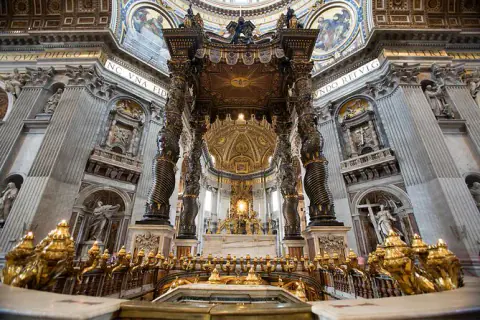 St. Peter's Basilica and dome climb
Stop 42:30 PM~ 3 hours
St. Peter's Basilica and dome climb
St. Peter’s Basilica is the enormous church at the heart of Vatican City, and visiting it really feels like two experiences in one. First, you can explore the basilica itself at your own pace. Then, if you’re up for it, climb the 551 steps to the top of the dome through a spiral staircase that gets narrower the higher you go.
Similar Experiences
- The dress code is enforced: no sleeveless tops, low necklines, shorts above the knee, miniskirts or hats. see the dress code (opens in a new tab)
- Entering the basilica is free, but the dome climb is a separate ticket.
Then 20 min walk to the next stop
![Related experience: [Rome] Castel Sant'Angelo Entry Ticket + Digital Audioguide](/itinerary/photos/affiliate-7ef48e3732018accf6e5-d2d1a6424193-w480.webp) Castel Sant'Angelo
Castel Sant'AngeloStop 55:30 PM~ 2 hours
Castel Sant'Angelo
Castel Sant’Angelo is the massive round fortress overlooking the Tiber, and today it’s a national museum that you explore as you climb. The route follows the Dromos, an ancient spiral ramp, up to the Terrazza dell’Angelo, where you’ll get sweeping views of the river and St. Peter’s Basilica. Hadrian built it in the second century as a tomb for himself and his family, but it was later used as a papal fortress and political prison. You can also book a guided tour of the Passetto di Borgo, the fortified passage connecting the castle to the Vatican.
Similar Experiences
Fun fact: The name comes from an angel sighting. Accoriding to the folktale, Pope Gregory the Great saw the archangel Michael here in 590, which is how an emperor's tomb ended up named for a holy angel.
- It's closed on Mondays, and admission is free on the first Sunday of the month.
Then 7 min by taxi to the next stop— or 27 min on foot
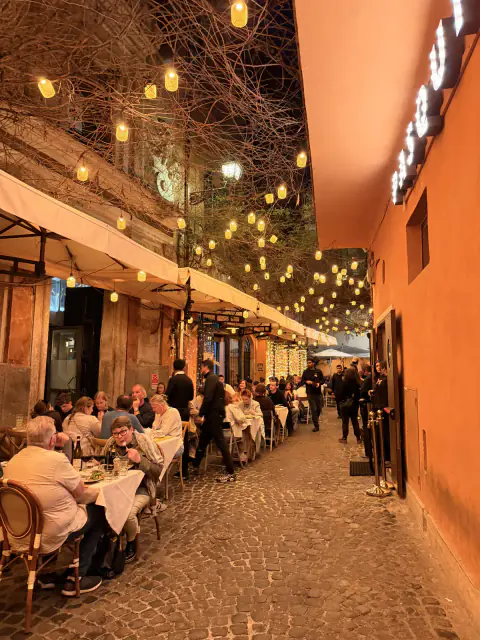 the streets at night 🌝
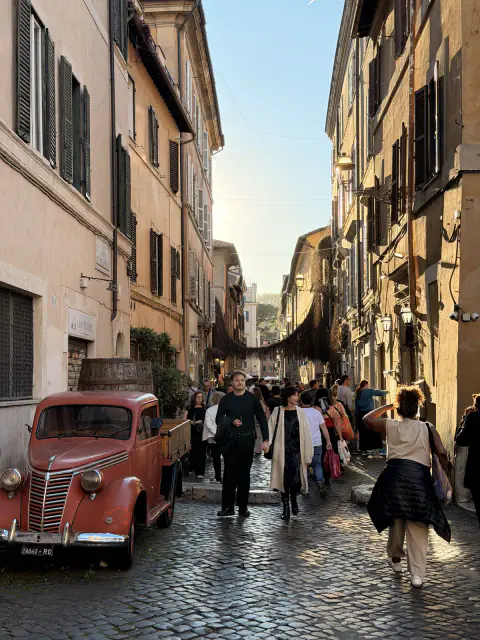 trastevere roads
Stop 67:30 PM~ 2 hours
Trastevere
Trastevere is the lively neighborhood across the Tiber, with a maze of narrow alleys and small piazzas full of trattorias and taverns serving classic Roman food. I recommend joining a food tour so a local can take you to the neighborhood’s best spots—with a few wine tastings along the way 🍷.
Similar Experiences
Fun fact: Via della Lungaretta, its kilometer-long stretch of cobbled bars and cafés, actually follows the path of the Aurelia Vetus, a Roman road dating back to 30 BC.
- The Piazza Trilussa steps are the district's meeting point, and by late afternoon they're packed with people and street performers learn more (opens in a new tab)
Then 4 min walk to the next stop
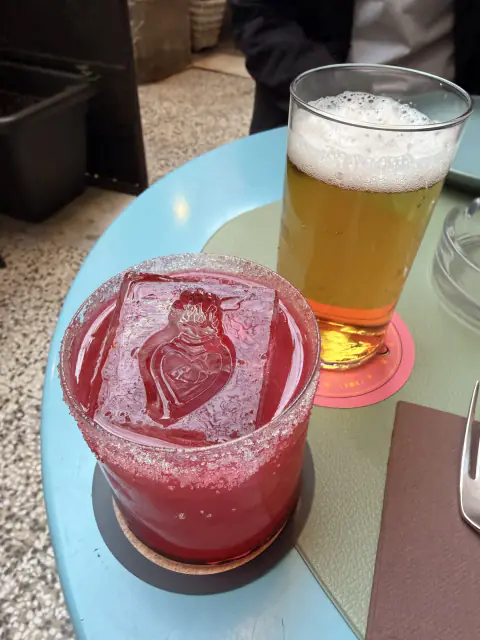 delicious drinks! 🍹
 even better plates
Stop 79:00 PM
CULTO
CULTO is a cocktail bar in the heart of Trastevere with some DELICIOUS plates. Every plate we had was better than the last - I'm not sure how! We sat outside in the small courtyard in front and enjoyed multiple drinks and a bunch of dishes — octopus, dumplings, duck, pork ribs, the list goes on!
Day ThreeShopping & the Historic Centre
Today we're shopping and eating our way across Rome. We'll start near Piazza Navona for a sandwich, beauty shopping and gelato, then head to Monti for the vintage shops. We're ending with cocktails at Wisdomless Club before the airport train.
- Centro Storico · Monti · Campo de' Fiori
- 7 stops
Then 5 min walk to the next stop
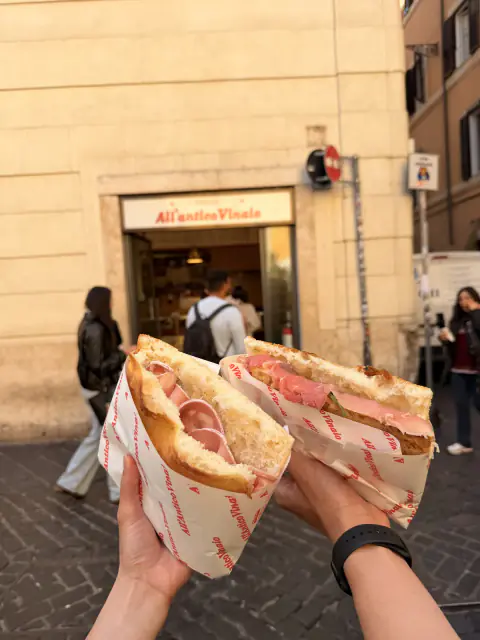 the goods 🥪
Stop 211:00 AM
All'Antico Vinaio
All’Antico Vinaio is a popular sandwich counter just two minutes from the Pantheon, where they bake fresh schiacciata every day and fill it right in front of you. The shop started in Florence and has since grown into one of Europe’s biggest sandwich chains, with locations around the world. Our favorite is the Beatrice, made with beef carpaccio and truffle cream—but I also loved the mortadella with burrata and pesto!
- There are two Rome counters about two minutes apart, so if the line at one is out the door, walk over and check the other. learn more (opens in a new tab)
Then 6 min walk to the next stop
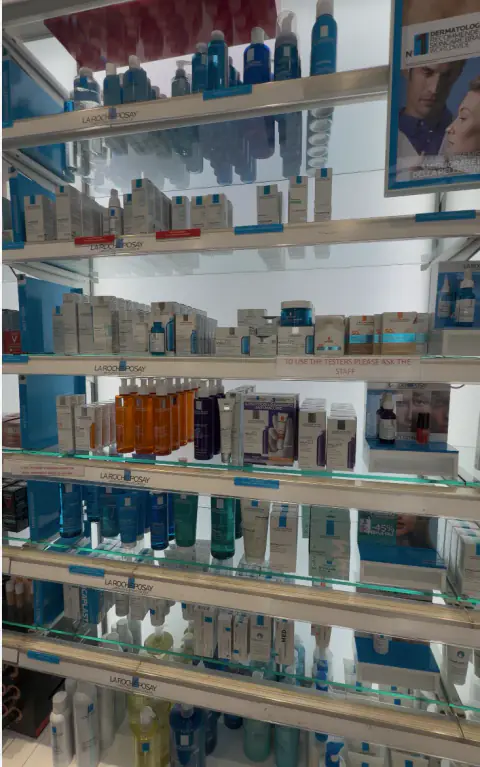 so many skincare options
Stop 32:00 PM~ 1 hour
Beauty shopping at Farmacia Senato Crisera Guglielmo
Farmacia Senato is a large pharmacy just behind Piazza Navona, with an entire wall of skincare and beauty brands like Avène, Filorga, Lierac, Klorane, Phyto, and more. Most of the pharmacies I visited in Italy kept everything behind the counter, so I couldn’t try anything before buying. This was the only one I found with testers galore, plus a huge selection and some great deals. Needless to say, I walked out with way too many Caudalie products 😅
- Look out for those BOGO deals!
Then 4 min walk to the next stop
 delicious gelato 🍨
 get the strachiatella!
Stop 43:00 PM
Gelateria La Romana dal 1947
Gelateria La Romana is a gelato counter just a short walk from Campo de' Fiori and Piazza Navona. The cones are the fun part: each one gets coated on the inside with pistachio, dark chocolate or white chocolate, and the panna on top comes in plain, zabaione or chocolate. You can watch them making the gelato from scratch, too. Stracciatella was my favorite of everything I tried 🍦
Fun fact: The company has been making gelato to its old Rimini recipes since 1947.
Then 23 min walk to the next stop
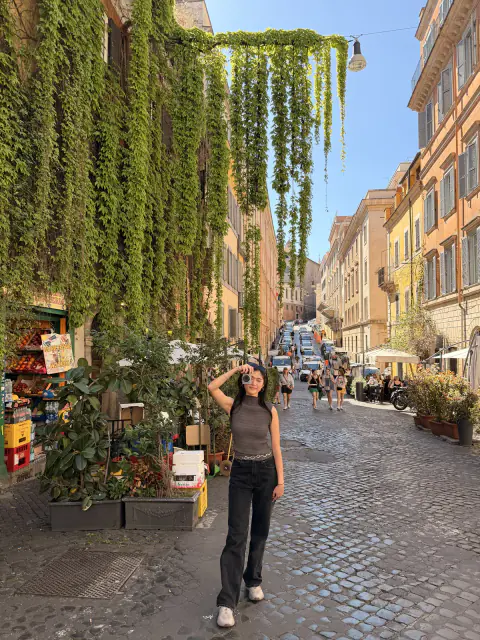 ivy covered buildings 🍃
Stop 54:00 PM~ 2 hours
Thrifting at Monti 🛍️
Monti is the neighborhood just north of the Colosseum, a grid of narrow cobbled lanes where Rome's vintage dealers and independent boutiques cluster. Via del Boschetto is the street to walk 👗. Ivy-covered buildings and shops on both sides stacked with 1970s clothing and second-hand designer pieces. I highly recommend checking out Pifebo and King Size Vintage for thrifting - they had the best selection ever.
- Mercato Monti, vintage and design market at Via Leonina 46/48, only trades on Saturdays and Sundays learn more (opens in a new tab)
- The vintage dealers cluster on Via del Boschetto, Via Urbana and Via dei Serpenti.
Then 20 min by bus to the next stop— or 15 min by car, 28 min on foot
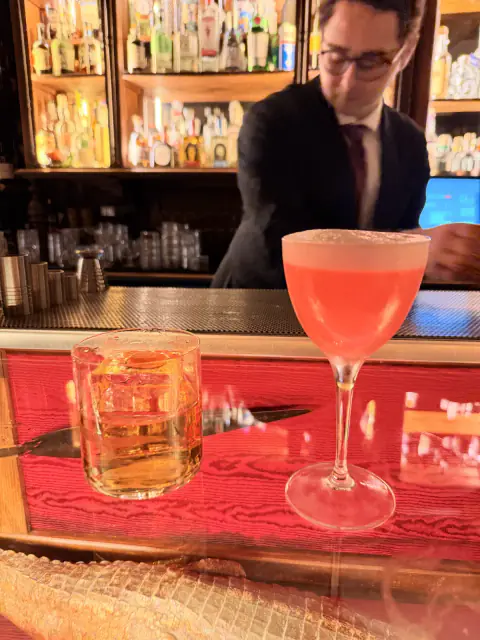 delicious drinks 🍹
Stop 65:30 PM
Cocktails at Wisdomless Club
Wisdomless Club is a speakeasy bar and tattoo parlor and it's the perfect place to go if you're looking for a classy night out with delicious drinks! The interior is moody with low light, stuffed taxidermy (all natural deaths don't worry!), and comfy arm chairs. We told the bartender what we liked and he mixed us something with a Brazilian liquor I'd never tried. He ABSOLUTELY nailed it!
Fun fact: One of the bookcases isn't really a bookcase — there's a secret room hidden behind it.
Then 27 min by bus to the next stop— or 17 min by car
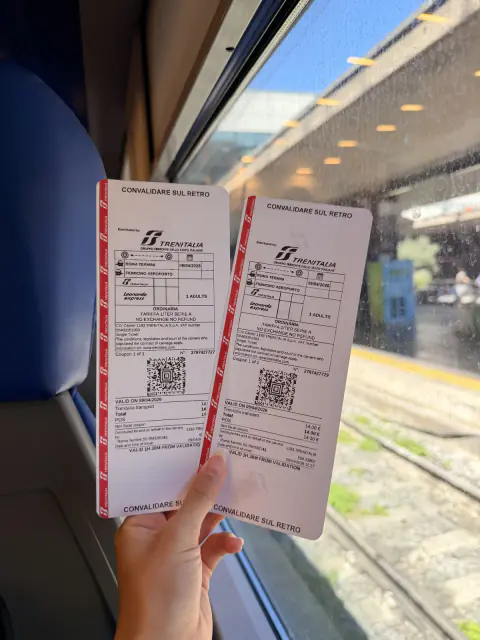 bye bye Rome! 👋🏻
Stop 77:30 PM~ 1 hour
Airport Train at Roma Termini
The Leonardo Express is Trenitalia’s direct train from Roma Termini, the city’s main station, to Fiumicino Airport. It runs nonstop, so once you board with your bags, you can settle in until you reach the airport. Fiumicino is quite far from central Rome, so leave yourself plenty of time to get there before your flight ✈️.
Before You Go to Rome
Yes! Three days is the sweet spot for a first trip. You get a full day for the Pantheon, Colosseum, Forum, Trevi Fountain and Spanish Steps, a full day for the Vatican and Trastevere, and a final day for shopping and eating from the historic centre to Monti.
Keep the monumental sights together on day one: the Pantheon, Colosseum, Forum, Altar of the Fatherland, Trevi Fountain and Spanish Steps. Protect day two for the Vatican and Trastevere. On day three, eat and shop around the historic centre, thrift in Monti, then finish with cocktails at Wisdomless Club before the airport train.
The Colosseum and the Vatican Museums come first, and the rest of the trip bends around them. Colosseum entry is timed and named, released 30 days ahead, so put a reminder in your phone. Book the Vatican for a morning if you can, since the crowd builds all day. Nothing else on these three days needs more than a day or two of notice.
Not Sunday — the museums are closed every Sunday except the last one of the month, and that day runs a short schedule with an early final entry. I'd also keep this day off Monday, because Castel Sant'Angelo is shut then and it's the stop that makes the walk back across the river worth taking. Any other day works, and earlier in the morning is calmer whichever one you pick.